If you read lots of our juicy content here at Travelness, you probably already know Scotland is one of my favorite places on the planet.
And one of its most underrated regions is the Scottish Borders, a little area sitting north of England… and south of Scotland’s much-more-famous places.
In this big bumper guide, we’ve unpacked everything you need to know about it. We’ve covered people, places, events, attractions, and a whole load of surprising and unusual stuff.
Slip into your kilt and come join the fun!

Why Visit the Scottish Borders?
Mainly because it’s one of the most overlooked and under-the-radar parts of Scotland.
It’s quiet and calm, it’s way less busy than some of the much-more-touristy parts of the nation, and there’s loads of stuff to do. Yep, the northern part of Scotland is more dramatic, and (arguably) better… but this part of Scotland is much more endearing and quaint, and locals are super-welcoming.

And because it’s right in the south of the nation, you can visit from many other parts of the UK.
It’s easy to get here from both Edinburgh and Glasgow, and it’s swift and simple to reach the region from most major cities in northern England (and some cities in southern England!).
If you don’t have time to head all the way to the Highlands, the Scottish Borders can be a convenient (and brilliant!) solution.
And get this: the whole area clocks in at around 1,800 square miles (that’s 4,660 square kilometers)—so the region is way bigger than most people realize.
Scottish Border highlights include seaside towns, world-class hikes, long-distance walks and bike rides, loads of history and heritage, many independent businesses, and a surprisingly stacked calendar of events. But we’ll come to all the details soon.
In short, not enough people come to this part of the world. But you should. And when you do, you’ll wonder why you left it so long. Here’s more…

The Scottish Borders: A Speedy Overview
The Scottish Borders is the very southeastern part of the nation.
Nobody really seems 100% sure exactly where the region begins and ends—but it’s broadly considered to be the area highlighted in this helpful little map below (we’re good to you here at Travelness):
As you can see, the region runs right along a section of the England-Scotland border, and covers a small part of the east coast. Between Newcastleton and Gretna Green, the border of the Borders (hah) then heads north, and eventually forms a big sort-of-circular area.
Some of the most significant settlements in the Scottish Borders are Peebles, Hawick, Jedburgh, Kelso, Coldstream, Selkirk, Melrose, and Eyemouth. They’re all pretty small places (the whole region has a total population of only around 110,000 people), but we’ll cover all of those towns in a bit more depth later in this guide.
The Scottish Borders is most well known for all its pretty undulating hills (great for cycling and hiking), and for being home to loads of abbeys.
It’s also quite an interesting area from an historical point of view (if you’re into all that stuff). Because the region is sandwiched between England and the rest of Scotland, the area has been home to lots of bloody battles, and it’s changed hands many times (the Romans had a big presence here, and it often came under Northumbrian rule).

Because of that storied history, you’ll find loads of heritage sites in the region, including castles, stately homes, and museums. But don’t worry, if you’re bored to tears by all that historical stuff (me too), you’ll find plenty of other exciting adventures.
And coming up next, we’ve covered them all!
Things to See and Do in the Scottish Borders
There’s loads of stuff to do in the Scottish Borders (way more than most people expect). You could easily spend a couple of months in the region without getting bored.
Here are some of the highlights…
Trails and treks

When people want to hike in Scotland, they pretty much always overlook this part of the nation.
But it’s actually a great place for tackling walks and wanders—many hikes are easy (and easy to access), you’re never far from a town or village, and you’ll never be surrounded by countless packs of other hikers.
Some of the best hikes in the Scottish borders include:
- The Eildon Hills: you can’t explore this part of Scotland without exploring the Eildon Hills, where you get three easy but varied summits (all very close to one another). On a hike here, you get great views of the surrounding areas, and you can start and end your walk in lovely lovely Melrose. If you can only tackle one hike, make it this one.
- The John Buchan Way: a 13.5-mile (22km) wander running from Peebles to Broughton. It’s named after a Scottish writer (he wrote ‘The 39 Steps’) who lived, worked, and vacationed in and around this area. The walk takes you between two endearing settlements and through moors and farms (and some sites related to the man).
- The Glentress Circuit: starting in the town of Peebles (from the Kingsmeadows car park), head east, and follow the Tweed River for an hour or so. After a while, you’ll head north, and leave the river behind. You’ll then wander uphill through forests and farmland, getting views of meadows, the river, and Peebles itself. The route runs in a satisfying and varied loop, and measures in at a total of just under 7.5 miles (around 12km).
- St. Mary’s Loch Loop: this loch is the prettiest and most interesting in the Scottish Borders… and you can walk around its entirety on an excellent and varied 5-hour stroll. You’ll want to stop every two seconds to take photographs. I massively recommend it.
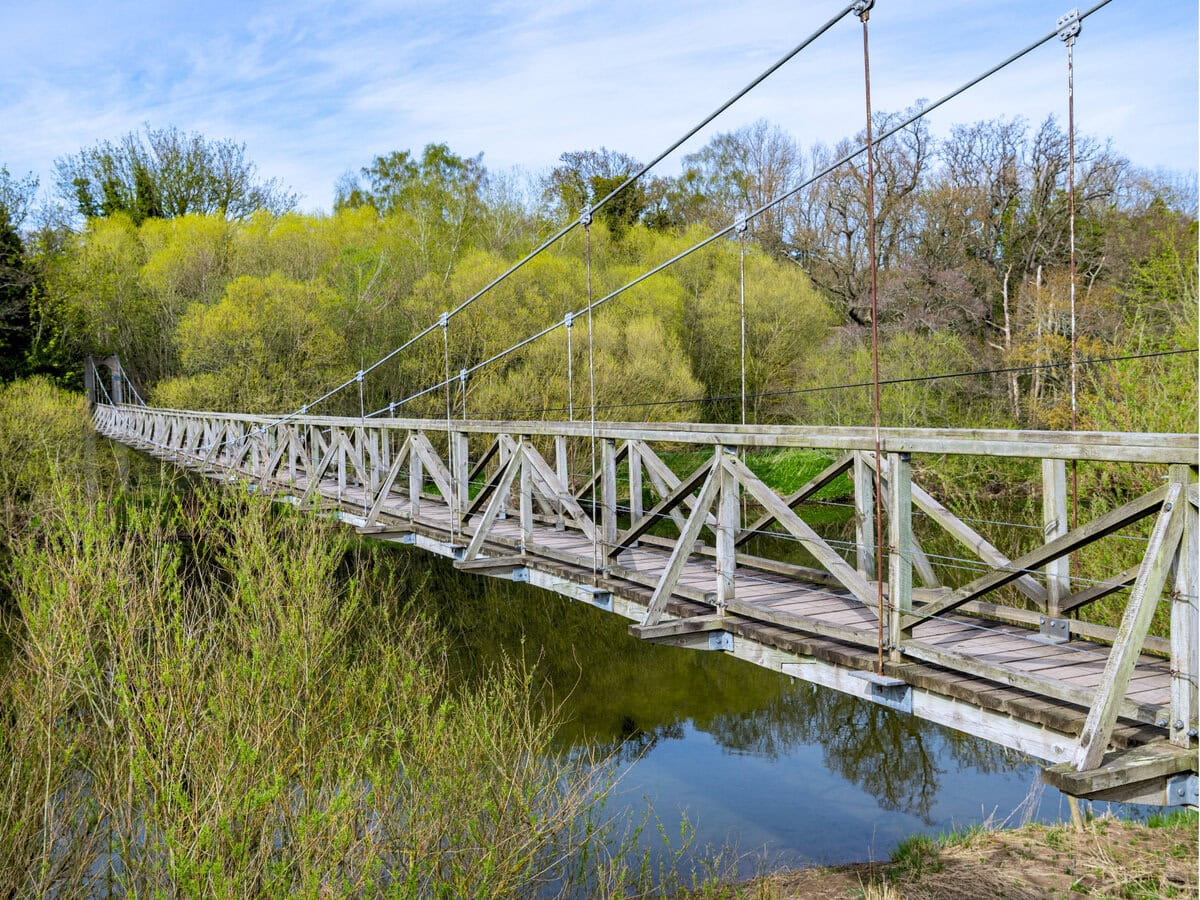
- The River Tweed Circuit, from Melrose: if you’re looking for easy but pretty, this is your best option. Starting from Melrose Abbey, you walk right along the banks of the Tweed. You’ll then hit an old and impressive suspension bridge. Cross it, and hike back to where you started along the other side of the river. In total, it’s a fairly short 4 miles (6 km).
All these hikes are just the beginning—here’s a much more detailed list of all the walks in the Scottish Borders.
If you’re looking for a long-distance wander, I recommend St. Cuthbert’s Way, which runs from Melrose to the strange shores of Northumberland’s Holy Island.
Less than half of the wander is in official Scottish Borders territory, but it’s a beautiful and remote adventure… and it’s all centered around the life and history of St. Cuthbert, some Anglo-Saxon 7th-century monk.
The whole walk measures in at 62 miles (100km), and it’s usually a 4-day adventure.

Another option is the uncatchily-named Borders Abbeys Way, which runs in pretty similar territory.
It measures in at 68 miles (109 km), and takes hikers on a circular route via the four abbeys at Kelso, Jedburgh, Melrose, and Dryburgh.
It’s not quite as varied as St. Cuthbert’s Way, but it offers more insights into history and heritage—and circular walks are always rewarding.
Your third option for a long-distance walk in the Scottish Borders is the Berwickshire Coastal Path, which runs along the coast for 30 miles (48 km).
It takes hikers from Berwick to Cockburnspath (or vice versa) and offers what I reckon are the best coastal views in southern Scotland.
Massively recommended—and if you’re ambitious and fit, you can get it all done in one (long) day.
For more walks and wanders in various parts of the nation, here are the 15 best hikes in Scotland. Don’t be surprised when you want to do them all.
Pedal along on two wheels

This part of Scotland is hugely popular with cyclists.
And that’s for lots of reasons. The landscape offers a sweet little combo of both flat sections and challenging hills, there are lots of lovely towns for mid-cycling stops, and most of the roads are pretty quiet. Riding between any of the towns can be super rewarding.
If you want to tackle a lengthy ride, I recommend the Coast and Castles (possibly my favorite bike ride in the UK). On the inland version of the route, the second half of your ride will be a semi-circle from Berwick to Edinburgh, and it’ll take you through loads of the Scottish Borders.
Alternatively, the second half of the Coast and Castles ride has a coastal option, which takes you along a similar route to the Berwickshire Coastal Path we’ve already outlined above.
Whichever option you choose, they’re both very-well signposted, and very easy to follow.
If you’re looking for a shorter ride in the Scottish Borders, you can simply tackle any part of the Coast and Castles route. For a mixture of variety, scenery, and worth-visiting places, the best one-day stretch for most people is the section between Kelso and Melrose. It measures in at around 15 miles (24 km).
If you prefer mountain biking, ride on over to Glentress 7Stanes, just east of Peebles. One of the most well-known mountain biking areas in Scotland, it has stuff for beginners, experts, and intermediates. It also offers bike hire, hiking trails, and a popular Go Ape Center.
And for even more mountain biking in the nearby area, check out Kielder. More information on that coming up later…!
Pitch and putt

Lots of people come to the Scottish Borders to play golf—the region is easy to access, the courses are quiet and peaceful, the scenery is beautiful, and there are many courses all stuffed into one concentrated area.
In total, there are around 20 golf courses in the Scottish Borders, and many of them offer 18 holes.
Some of the best are:
- Eyemouth Golf Club: highly popular, and perched right on the coast
- Duns Golf Club: sitting in the foothills of the Lammermuir Hills
- Hawick Golf Club: which is the oldest in the region
- and Galashiels Golf Club: a great option for a short game, with only 9 holes.
Explore history and heritage at some castles

Scotland has loads of famous castles. And some of its best are located in the Scottish Borders. Highlights include…
- Floors Castle: dating from 1721, this close-to-Kelso castle is more modern than many others in the region. Rather than a battle-based fortress, it was (and still is!) a family home. Sitting beside little parks, tiny lakes, and the River Tweed, Floors Castle offers walled gardens, glasshouses, woodland wanders, a cycle trail, and elegant architecture.
- Roxburgh Castle: right beside Floors Castle, this place couldn’t be any more different to its nearby neighbor. Once a 14th-century fortress, it was often battled over and captured, and it’s now just a ruinous relic. But it sits on a little hill, it offers pretty panoramas of the surrounding area, and it’s a great picnic spot.
- Neidpath Castle: just a little west of Peebles, Neidpath Castle is most famous for being one of the most popular wedding venues in the Scottish Borders. You can visit year-round, but only by appointment. They also offer lunches and teas in the Great Hall.
- Hume Castle: located between Greenlaw and Kelso, this big boy sits on the brough of a hefty hill. It used to be one of the most impressive defensive fortresses in all of Scotland. It’s a ruin, it’s free to get in, and it offers great views of the surrounding area.
- Hermitage Castle: if you’re a bit bored by history but you like sinister and scary stuff, this is the castle for you. Known as “the guardhouse of the bloodiest valley in Britain,” it’s got a history of murder and the macabre, and a whole load of torture and terror.
- Fatlips Castle: contender for strangest-named castle in the world, good ol’ Fatlips doesn’t offer any events or activities. Instead, it just sits atop a very lofty peak, and it’s a great summit-point for hikes in the area. It’s located between Hawick and Jedburgh.
For way more, check out our guide to the 17 best castles in Scotland.
Rove around some museums
I personally hate museums. But don’t let my belligerence stop you from wandering through some of the banal bore-fests.
The best and most famous museums in the Scottish Borders include:
- John Buchan Story Museum: remember the writer we mentioned in the hiking section? Well, in Peebles, you can visit a museum all about the man. It unpacks and explores his life, work, and family—and the Scottish places that were significant to him.
- Mary Queen of Scots Visitor Center: sitting right in the middle of Jedburgh, this museum is set inside a 16th-century towerhouse. The famous woman spent a month in Jedburgh back in 1566. This museum explores that month and much more.
- Trimontium Heritage Center: just east of Melrose, this museum focuses on the Roman history of the Scottish Borders (and features lots of relics). It’s set just beside the fort of the same name, and it’s arguably the most popular heritage site in this part of the world.
- Jedburgh Castle Jail and Museum: another option for people who like gruesome and grisly stuff, you can head here to learn about 19th-century imprisonment and all the torture and terror that went with it. The place also has a reputation for paranormal sightings.
- Number Four Gallery: a unique little place, this contemporary art and craft gallery sits in St. Abbs. It features work from Scottish artists, and it’s very comfy and welcoming.
Get involved with some surprisingly-stacked festivals and events
Because there’s a big community spirit in the Scottish Borders, the region offers a packed calendar of traditional annual events (most of which have been occurring for a long ol’ time, and celebrate the history, heritage, and people of the local area).
If you want to hit some festivals and events in the Scottish Borders, some of your best options include:
- Peebles Beltane Festival: one of the biggest cultural festivals in the Scottish Borders, this week-long event has dominated the town of Peebles since all the way back in 1897 (no, you haven’t read that wrong). It’s an old-school experience, full of ceremonies, parades, concerts, and ancient instruments.
- Kelso Races: every year, Kelso hosts a number of horse racing events. Most months offer at least one race… so make sure you check the calendar.
- Borders Book Festival: an annual extravaganza stacked with reads and writers, this is way more than just a boring book fair. Expect talks, live comedy, live music, book signings, meet-the-author sessions, and a whole load of unique literary fun. If you like books, this is a genuine mustn’t-miss.
- Braw Lads’ Gathering: another horse-riding event (this part of Scotland sure loves horse riding), this annual festival also features dances, concerts, traditional sports, and lots of kid-friendly stuff. The focus is on pomp and tradition, which isn’t necessarily for everyone. But despite the pretense, it’s still a very welcoming event.
- Traquair Medieval Fayre: genuinely unique and unusual, Traquair Medieval Fayre features a bunch of themed entertainment. Expect jousting, armed combat, falconry, archery, living history, live medieval-style music, jesters, themed food, endless interactive activities, and lots of family-friendly fun.
Visit all the towns and villages

Some of the nation’s most endearing towns and villages are lurking in the Scottish Borders. Here are the best of them:
- Peebles: possibly the prettiest and most popular of all the towns in the Scottish Borders, charming Peebles sits right on the banks of the River Tweed. It’s popular for salmon fishing, and lots of people use the place as a base for visiting both Dawyck Botanical Gardens and Kailzie Gardens.
- Hawick: the biggest of all the Scottish Border towns (well, I say ‘biggest,’ but the population is only around 13,000 people), Some of its most popular attractions include the Borders Textile Towerhouse and the 107 acres of Wilton Lodge Park.
- Jedburgh: although Jedburgh is small, it’s relatively well-known. It’s home to a couple of pretty famous tourist attractions, including the Mary Queen of Scots House, the abbey, the family-friendly Jedburgh Castle Jail, and the colorful buildings of its central stretch. Because it sits so close to England, Jedburgh was once an important frontier town.
- Kelso: this is one of the most activity-packed towns in the Scottish Borders. It’s home to Floors Castle, Roxburgh Castle, Kelso Abbey, more historical sites, some pretty parks, and lots of stroll-worthy riverside stretches. And because it lies in the center of the region, it’s a great choice for a base.
- Coldstream: I used to come here a lot when I was a kid. It sits right on the border with England—if you stand in the town and look at the other side of the river, you’re looking at another nation. It’s a small place (with a population of less than 1,000 people), and it’s pretty and quaint.
- Melrose: maybe the most iconic town in the Scottish Borders, Melrose has the most famous abbey in the region. It also offers the Eildon Hills, the Melrose Sevens (a rugby competition), some insights into Roman history, and loads of great places to eat and drink. Another great choice for a base.
- Selkirk: lofty Selkirk is situated above two valleys, so it offers loads of lovely views (and it’s a great base for hiking). It’s also home to the fishy fun of Philiphaugh Salmon Viewing Center, and the massive-spired Sir Walter Scott’s Courtroom.
For more sweet little Scottish settlements, here’s our list of the top 24 prettiest villages and towns in Scotland.
Venture to other parts of Scotland

As I keep saying, this part of Scotland is very easy to access.
So (logically) it’s also easy to access other parts of Scotland from here.
Bordering this part of Scotland, you have Edinburgh & The Lothians to the north (home to Edinburgh, North Berwick, the overlooked Pentland Hills, and lots more fun stuff).
To the west, you have Dumfries & Galloway (lots of nice hikes and lots of nice hills… and part of the region is one of the Scottish UNESCO sites).
And to the south, you have Northumberland (more on that soon).
Yep, the Scottish Borders are an excellent place to explore. But they’re also an excellent base for adventures further afield.
Explore the shores and sights of sprawling Kielder

Alright, Kielder isn’t in Scotland—it actually sits on the English side of the border.
But bear with me here. It’s exciting, it’s super popular, and its forests stretch into the Scottish part of the borders anyway. So in some ways, it feels like it could easily be part of the same region.
The area is most famous for its hefty reservoir, which is the biggest of its type in Europe (well, depending how you measure it).
But Kielder also offers hikes, bike rides, a big multi-purpose circuit around the entirety of the reservoir (measuring in at 13 miles/21 km), fishing, family days out, lots of wildlife, and plenty more. While you’re roaming through the Scottish Borders, you’re very close to Kielder—so I definitely recommend checking it out.
For much more information on the region, check out our guides to the 18 best things to do in Kielder, and our complete guide to biking in Kielder.
Dip into other parts of Northumberland

I’m probably a bit biased, because I’m from Northumberland. But I think it’s one of the most interesting regions in England.
Here, you’ll find a massive variety of brilliant stuff. It’s one of the most castled regions in the world, it has a beautiful coastline, it’s one of the least-populated parts of the UK, and it’s full of outdoor adventures. You also get charming towns, friendly faces, and lots of multi-day hikes and bike rides.
Because I’m from the area, we’ve covered Northumberland in massive depth here at Travelness. We have guides on the best beaches in Northumberland, the best castles in Northumberland, the best towns and villages in Northumberland, the best hikes in Northumberland, and 21 things the area is famous for.
Explore some abbeys

When most people think of the Scottish Borders, they think of all its abbeys. This part of the world was once super religious, and home to lots of monks. There are four different abbeys left in the region, and they’re all relatively different to one another.
They are:
- Dryburgh Abbey: Founded in 1150, Dryburgh Abbey sits (unsurprisingly) near Dryburgh. It’s pretty well-preserved, it sits beside the River Tweed, and it’s home to the tomb of Sir Walter Scott (a famous Scottish novelist).
- Melrose Abbey: The most famous of the four, Melrose Abbey was founded in 1136, and its construction was ordered by King David I. Its walls are the end point (or start point) for St. Cuthbert’s Way, that big long multi-day walk we’ve already mentioned. Some people reckon it’s the most well-known ruin in all of Scotland.
- Kelso Abbey: Once one of the biggest and richest religious houses in Scotland, Kelso Abbey was massive. Though little of the abbey part remains, lots of the church is still visible and intact. Because Kelso is quite popular, so too is its abbey.
- Jedburgh Abbey: the most still-intact of all the four, Jedburgh Abbey was built over a period of more than 70 years. It’s a mixture of Romanesque and early Gothic architecture (whatever that even means), and it offers kid-friendly attractions and events. If you’re traveling with children, this is the best abbey to visit.
Head to some coasts and cliffs

You need to visit both Eyemouth and St. Abbs, two of my favorite places in southern Scotland.
Eyemouth is a lovely little family-friendly coastal resort, with nice beaches, loads of kid-friendly activities, and endless unpretentious places for munching on classic seaside food. In terms of centrality to the rest of the Scottish Borders, it’s admittedly not a great base. But in terms of charm, beauty, and things to do, it definitely is.
The fishing village of nearby St. Abbs is much smaller, but it’s equally charming, and has an atmospheric and alluring harbor.
The coastal stretch between Eyemouth and Cockburnspath is one of my favorite coastal stretches anywhere in the world. Full of panoramas, massive wind farms and lofty cliffs, you’ll fall in love with it. It’s great for hikes, bike rides, and just sitting and staring.
Gawp at the grandeur of some sprawling stately homes
Some of the most iconic homes and houses in this part of Scotland include:
- Traquair House: the oldest still-inhabited house in Scotland, this place plays host to the annual Traquair Medieval Fayre. Other attractions include a chapel, a massive garden, a big outdoor maze, many royal relics, and lots of family-friendly events. Almost 30 Scottish kings and queens have visited (or lived in) the place.
- Abbotsford House: once the home of Sir Walter Scott, this massive place has been largely untouched since the guy died. You can visit his study, his gardens, his library, and even the room where he died. If you really care about all the history and heritage, get yourself on a guided tour.
- Paxton House: built in 1758, Paxton House sits in a riverside location (you can arrange boat trips down the river from here), and it has some pretty and popular gardens. Other highlights include a water wheel, a squirrel hide, annual visits from Santa, and more than 70 paintings from the National Gallery of Scotland.
- Mellerstain House: built in the 18th century, this beefy behemoth is often voted as (and considered to be) one of the best stately homes in the UK. A massive Georgian mansion, it sits in parkland and formal gardens, and also offers art installations, family fun, and some self-catering holiday cottages. It sits between Melrose and Kelso.
Tackle the Borders Historic Route road trip
Scotland is brimming with loads of great road trips.
The most famous by far is the North Coast 500, which takes riders in a big fat loop around the far north of the nation.
But an almost-as-good option is the Borders Historic Route, which runs from Scots Dyke (close to the English city of Carlisle) all the way to Edinburgh. It clocks in at a total of 89 miles (143 km), and most people ride the route for around 3 or 4 days.
Highlights include some parts of the Scottish Borders (obviously), along with sections of Dumfries and Galloway, and the big grand finale at Edinburgh.
Another option for a Scottish Borders road trip is the Jim Clark Trail, which was launched in 2020. It measures in at 50 miles (80km), and starts and ends at the Jim Clark Motorsport Museum in Duns. The route is named after the world champion racer, who spent lots of his life in and around this area.
For more information on riding and revving around the nation, check out our list of the 18 best road trips in Scotland, and our guide to the 13 best road trips near Edinburgh.
Boggle through binoculars
The Scottish Borders are super popular with birdwatchers, who head here to spot gulls, rare breeds, and native species. Highlights include ospreys, buzzards, and golden eagles.

The region’s most famous bird watching spot is St. Abb’s Head (an official national nature reserve perched right on the edge of some cliffs). It’s home to thousands of seabirds who nest in and around the area.
You also have many other options—here’s a list of all the latest sightings in the region, to give you a better idea of where (and when!) you might want to go.
For more animal adventures, check out our guides to the best zoos in the UK, and the best aquariums in the UK… our guide to all the wild animals you can see in Scotland.
Leer at some lochs

Scotland is home to more than 30,000 lochs. And although most of them are in the northern part of the nation, you can also find some decent ones in the Scottish Borders. Highlights include:
- St. Mary’s Loch: the biggest natural loch in the Scottish Borders, St. Mary’s Loch sits pretty much halfway between Selkirk and Moffat. Silent and serene, it’s popular for fishing and boating… and wandering around its whole perimeter is an excellent hike.
- Loch of the Lowes: just south of St. Mary’s Loch, this place is even quieter than its nearby neighbor. A great choice for a peaceful hour or a little picnic.
- Mire Loch: just inland from the craggy cliffs of St. Abb’s Head, narrow Mire Loch isn’t the most exciting place on the planet. But it’s a great spot for a picnic—and if you head here in summer, it’s perfect for watching birds.
For more, swim over to our list on the 17 best lochs in Scotland.
Transportation in the Scottish Borders
The most common access point for getting to the Scottish Borders is Berwick-upon-Tweed (the most northern town in England, it sits right on the border between England and Scotland).

Berwick isn’t a massive place, but it has a busy train station and lots of good bus connections. You can easily reach Berwick by both bus and train from Edinburgh and Newcastle (and many parts of the Scottish Borders).
To get around Scottish borders, you have a few different options.
The new Borders Railway route heads south to north, and has stops in both Stow and Galashiels (and many other places). You can also travel by bus via the excellent and relatively-regular Borders Buses routes—there are more than 20 different routes, and all significant settlements have at least one bus running through them.
Another option for getting around the Scottish Borders is hitchhiking. I know, I know, you probably think hitchhiking is really dangerous and risky, but your life is not a movie. Hitchhiking is a really fun and rewarding way to get around Scotland, and it’s really easy—it also means you’re not restricted by bus timetables, and you don’t need to hire a car.

If you do want to hire a car in the Scottish Borders, you obviously get endless freedom and flexibility, but it can be pretty pricey. You’ll find rental places in Newcastle, Edinburgh, Berwick, and Galashiels.
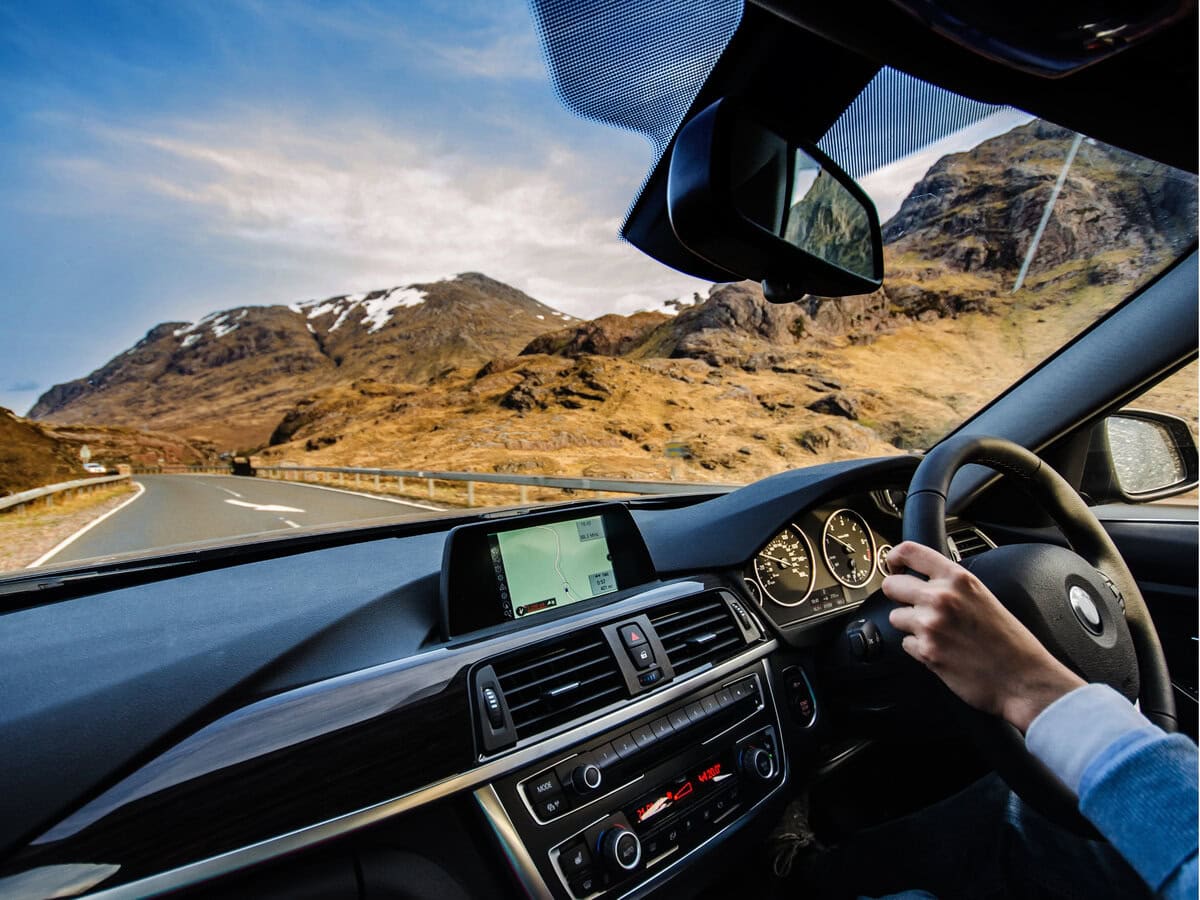
If you have access to a car, make sure you drive along the A68—it offers the best views in the area.
Where to Stay in the Scottish Borders
Here are some of the best and most popular accommodations in the Scottish Borders:
- Cringletie House: if you want to treat yourself to some class and elegance, head here. Situated in an 1861 country house, it offers 28 acres of landscaped gardens.
- Black Bull: sitting in Lauder, the atmospheric Black Bull is a proper old-school pub, but brought up to modern-day standards. I love places like this.
- Ladyurd Farmhouse: if you’re looking for really remote and rural, this is one of your best options. Sitting on a genuine working farm, this is as rustic as it gets.
- The Old Library: just a short stroll from the beaches of Eyemouth, this place is clean, comfortable and affordable, and popular with couples. It’s a great base.
- Heatherlie House Hotel: sitting in Selkirk, this is another elegant option. Ever wanted to holiday in a hefty Victorian mansion? Now you can!
- Abbey View: this self-catering accommodation is a fun throwback, and it’s like staying with your grandma. Because it’s in Kelso, it’s an excellent option for a central base.
- The Townhouse Hotel: in the center of Melrose, this is a good balance between high-end and casual… and it’s only a 2-minute walk from the abbey.
If you want to save some moolah, some of your best budget-friendly picks are Village Life, Eyesleepover, Jura Westcote Glamping, and Islay Westcote Glamping (those last two sit in the same place).
Camping is another great option in this part of the world. Thanks to Scotland’s brilliant ‘Right to Roam’ initiative, you’re able to wild camp basically whenever and wherever you want (well, assuming it’s not, like, someone’s garden).

If you don’t want to wild camp, some of the region’s best campsites include Lauder Camping and Caravanning, Coldstream Holiday Park, and Jedburgh Camping and Caravanning. For more, here are all your best camping options in the Scottish Borders.
If you’ll be doing some camping, pitch up in our guide to the best tents for camping in Scotland.
Food and Drink in the Scottish Borders
One of the best things about food and drink in the Scottish Borders is that rampant globalization hasn’t yet swallowed up the region. Though you’ll still find some chain restaurants and cafes, this is a fiercely independent area, and there’s a big focus on local people, local products, and local suppliers.
You’ll probably eat most of your food in old-school pubs, serving up traditional drinks, warm welcomes, and unpretentious atmospheres. Some of the best include…
- Buccleuch Arms: a little classier than most pubs in the region, this place is great for a romantic meal. Expect steaks, game, and lots of birds.
- The Cobbles: sitting in Kelso, this is simple pub fayre, but executed very well. Offerings include curries, salads, pies, flatbreads, burgers, and plenty of big flavors.
- The Cross Keys: located in Ancrum, this is one of the most famous pubs in the area. It sits right over the river, and it’s always packed with locals.
- The Craw Inn: sitting in Auchencrow, this pub has a real fire, elegant and imaginative plates, lots of flavorful seafood, and a huge focus on local ingredients.
If you’re looking for restaurant-style places (instead of chowing down on constant pub fayre), get yourself to…
- Giacopazzis: right beside Eyemouth’s harbor, this place is famous for ice cream, fish and chips, and other seaside classics. It’s perfect for a family meal.
- Copshaw Kitchen: halfway between a cafe and a restaurant, Copshaw Kitchen is informal and casual… and it has an extensive menu of massive tastes.
- Stewarts’ Bistro: one of the most well-known restaurants in Jedburgh, this award-winning bistro offers classy and delicate food, but without any pomp or pretense.
If you’re hunting for cafes, you should check out:
- The Flat Cat Cafe and Gallery: sitting in the tiny town of Lauder, this place is the epitome of charming. Decked out with varied art from local artists, they serve up freshly-made eats and treats, and they’re fiercely proud of the local area.
- The Spotty Dog Deli: also in Lauder, this place is right beside Flat Cat Cafe. It’s mainly a deli, selling lots of locally-produced specialities (including jams, biscuits, cakes, eggs, and plenty more). But it also has a small seating area, and great coffee and cakes.
- The Three Hills Coffee Company Cafe: this specialty coffee roastery sits right in the middle of Selkirk. The staff are super knowledgeable and passionate, the decor is classy but unpretentious, and the three-cheese toasties will blow your little tastebuds off.
If you’re hunting for local specialties, get your mouth around haggis (obviously!), Selkirk Bannock (a bready-style fruit cake), Berwick Cockles (which are actually stripey candies), and some Borders Lamb. Make sure you also munch on some fish and chips in Eyemouth.
For more local fayre, check out Kelso Farmers’ Market, which is usually held on the fourth Saturday of every month. Galashiels Heartland Market is another popular option.
Practical Tips for Planning Your Trip to the Scottish Borders

- The best times to visit the Scottish Borders are May, June, September, and October, when you get better weather and longer days. During these months, you also avoid the peak prices of the heavy tourist season, and there’ll be fewer crowds (not that this part of Scotland attracts huge crowds anyway).
- Make sure you pack lots of waterproof clothes and some good reliable shoes. Scotland gets a lot of rain, no matter the season. November, December, and January are usually the rainiest months.
- You should also pack warm clothes. Even during summer, low temperatures at night can sit at around 10°C. Add that to a bit of rain and wind, and it can feel even colder.
- Pack some midge spray, if you’re traveling in warmer months. Though Scottish midges aren’t as much of a problem here as they are in other parts of Scotland, they’re horrendous little creatures… and even small swarms genuinely have the power to ruin a vacation.
- Like in England, Scotland’s currency is also the British Pound—and you can use English money in Scotland. For much more information, here’s our guide to Scottish currency.
- If you ever need to contact any emergency services, call ‘999.’ That’s also the case for mountain rescue (not that you’ll need it in this relatively low-level area).
- Before you reach the nation, wander over to our guides on the 18 things you shouldn’t say to Scottish people and the 22 things you shouldn’t do in Scotland.
- If you’re heading to the Scottish Borders in peak season, book accommodations in advance. Yeah, it’s not the most popular part of Scotland—but the best overnight options often book up quite quickly.
- If you don’t have much time but still want to explore the Scottish Borders, you can take a trip from Edinburgh. Options include a full-day tour of the best of the region, a Rosslyn Chapel & Scottish Borders Tour, and this Alnwick Castle & Scottish Borders Tour.
- Over the low season (that’s typically November until March), lots of tourist attractions in the Scottish Borders are closed. So plan accordingly… and if you’re traveling in low season, check what will and won’t be open.
Complete Guide to the Scottish Borders: Before You Go
Thanks for joining us on that lengthy adventure through the Scottish Borders!
As (I think) we’ve made pretty clear by now, we definitely recommend visiting the region. Underrated and overlooked, it’s stacked with brilliant stuff. So get yourself there!
Thanks for choosing Travelness, thanks for being you, and we’ll see you again soon.
And for even more Scottish inspiration, here are 19 photos that will make you fall in love with the place.