Coming up: tiny lanes, massive adventures, underrated road trips, when you will and won’t need a car, some overlooked tips on UK driving, whether or not you need a license, some weird traveling facts, and everything you need to know about driving in Scotland!
🏴 I’ve traveled to Scotland more times than I can remember.
(and to really enjoy the place, unless you only stay in Edinburgh or Glasgow, you reeeaally should have access to your own car)
But: what do you need to know about driving in Scotland? Which side of the road will you drive on? Are there any tips I should know? Where can I get a hire car? And what on earth are single-track roads? 😕
Coming up, all that and more: here’s absolutely everything you need to know about driving in Scotland! 🚘
The general safety picture for driving in Scotland
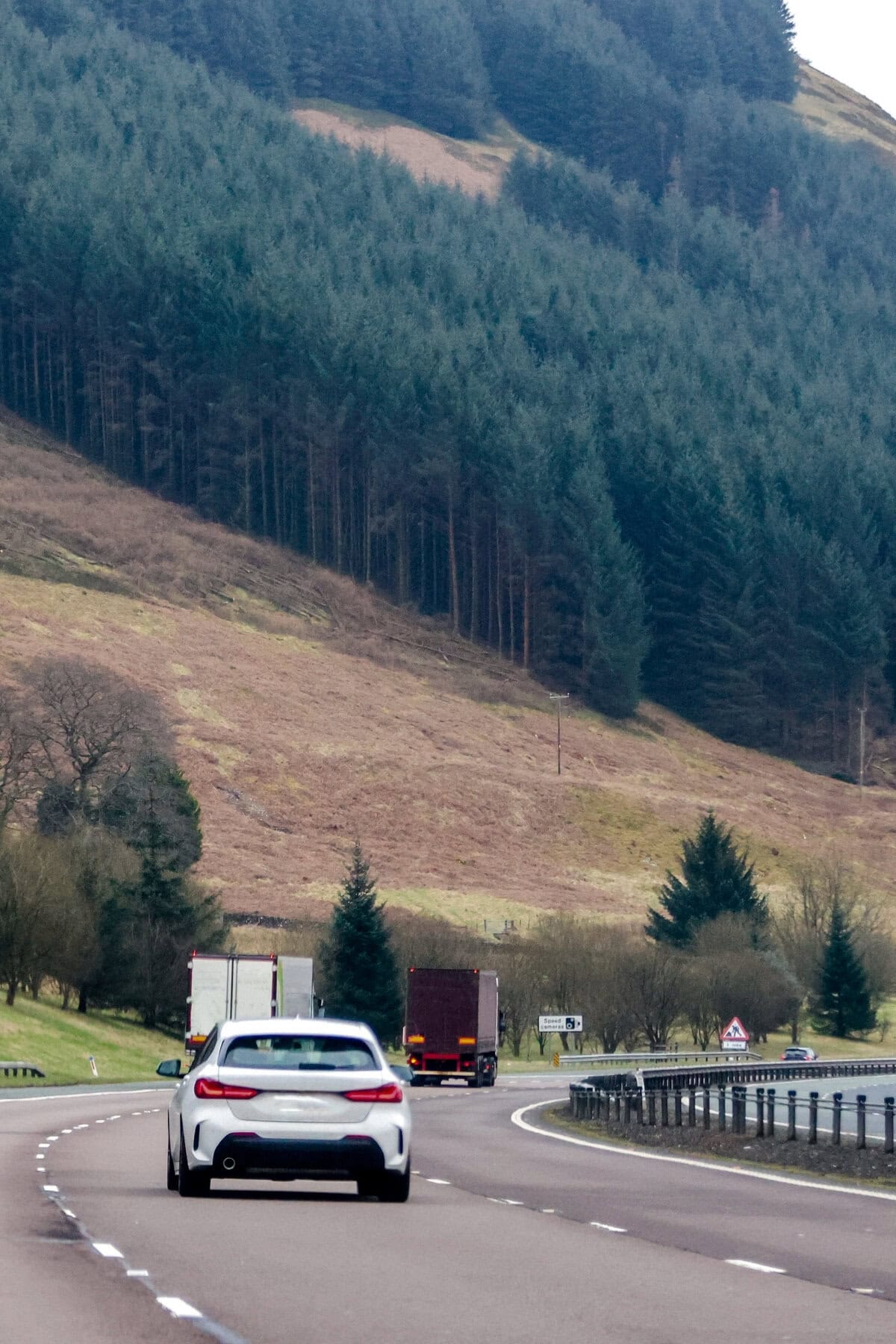
In general, driving in Scotland is very safe:
- The quality of roads is very good
- (and the quality of cars is good too)
- Drivers give way to pedestrians and cyclists
- The UK is in Europe’s top half for road-safety rankings
- Driving rules and traffic rules are strictly enforced
- It’s VERY common for tourists to hire cars
- People follow the rules of the road
… so, in general, the picture looks good! More specific details coming next, but, in general: if you’re a confident driver, you’ll be absolutely fine in Scotland 🎉
When will I want to drive in Scotland? And when won’t I?
If you’re only staying in cities, you usually DON’T need to hire a car. Public transport is good within cities—and good for getting from one city to another.
🚂 For example, it’s very easy to find trains between all the major cities (like Edinburgh, Glasgow, Aberdeen, Inverness, and so on).
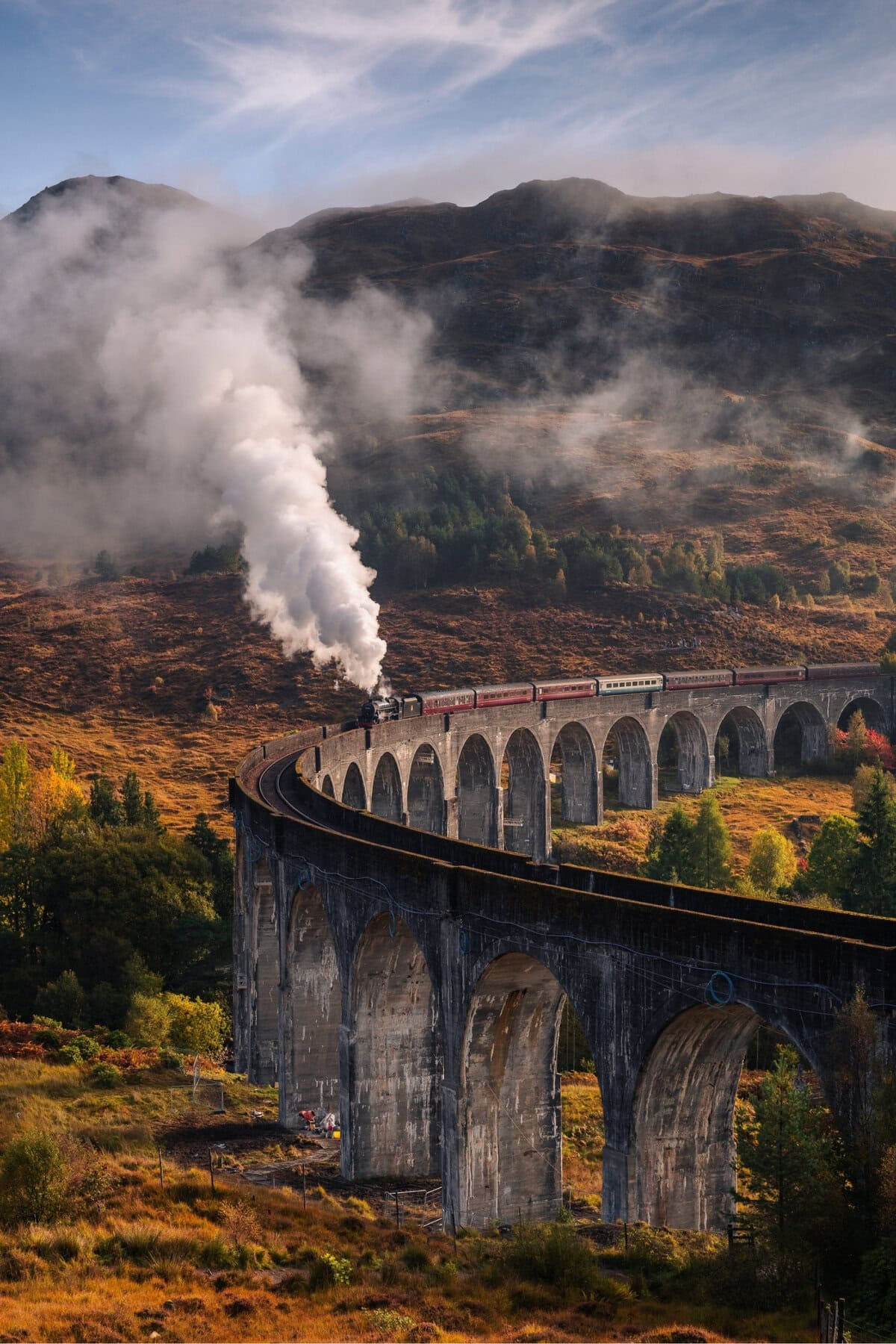
… but if you want to get rural, you should ABSOLUTELY hire a car. In rural areas, public transport is sometimes non-existent. And even where it does exist, it’s very sporadic, very unreliable, and very slow and limited.
It’s also worth noting that you can take tours. If you really really really don’t want to drive, but want to get all rural and go on outdoor adventures, you’ll find tours from cities (especially bigger cities like Glasgow and Edinburgh and Inverness).
The companies offering these tours will pick you up in the cities, drive you to some of the prettiest and most popular places close to those cities, spend a full day showing you all the best bits, then drop you back off in the city again. Super convenient!
For some of our favorite tours in and around Scotland, here are guides on:
- The top 15 Inverness tours (feat. local experts)
- The top 18 best tours in (and from) Edinburgh
- The 15 best day trips from Edinburgh
- The 15 best day trips from Glasgow
… and for looking for way more tours and trips, get yourself over to Viator and GetYourGuide. You’ll find LOADS of varied options on both sites.
⛴️ Another note: on some Scottish ferries between the mainland and the islands, you CAN take a car onboard. And taking a car to an island is an excellent way to explore. All ferries are managed by CalMac; and you book your tickets at the CalMac site.
Hitchhiking in Scotland (your last non-driving option)
If you want to explore rural areas in Scotland and you don’t want to hire a car…
… you do have one more option:
👍 Hitchhiking 👍
I’m very aware this might seem very leftfield. But I’ve hitchhiked in Scotland 100s of times. If you want to ride along a rural route (for a hike or to get to a village or to see a waterfall or whatever) without access to your own car, hitchhiking is often LITERALLY your only option.
From these hitchhiking adventures, I’ve been to loads of cool places, I’ve made lifelong friends, I’ve had adventures and recommendations I otherwise wouldn’t have heard about, and I’ve even stayed with (and had dinner with) people who were total strangers until a few hours before 😇
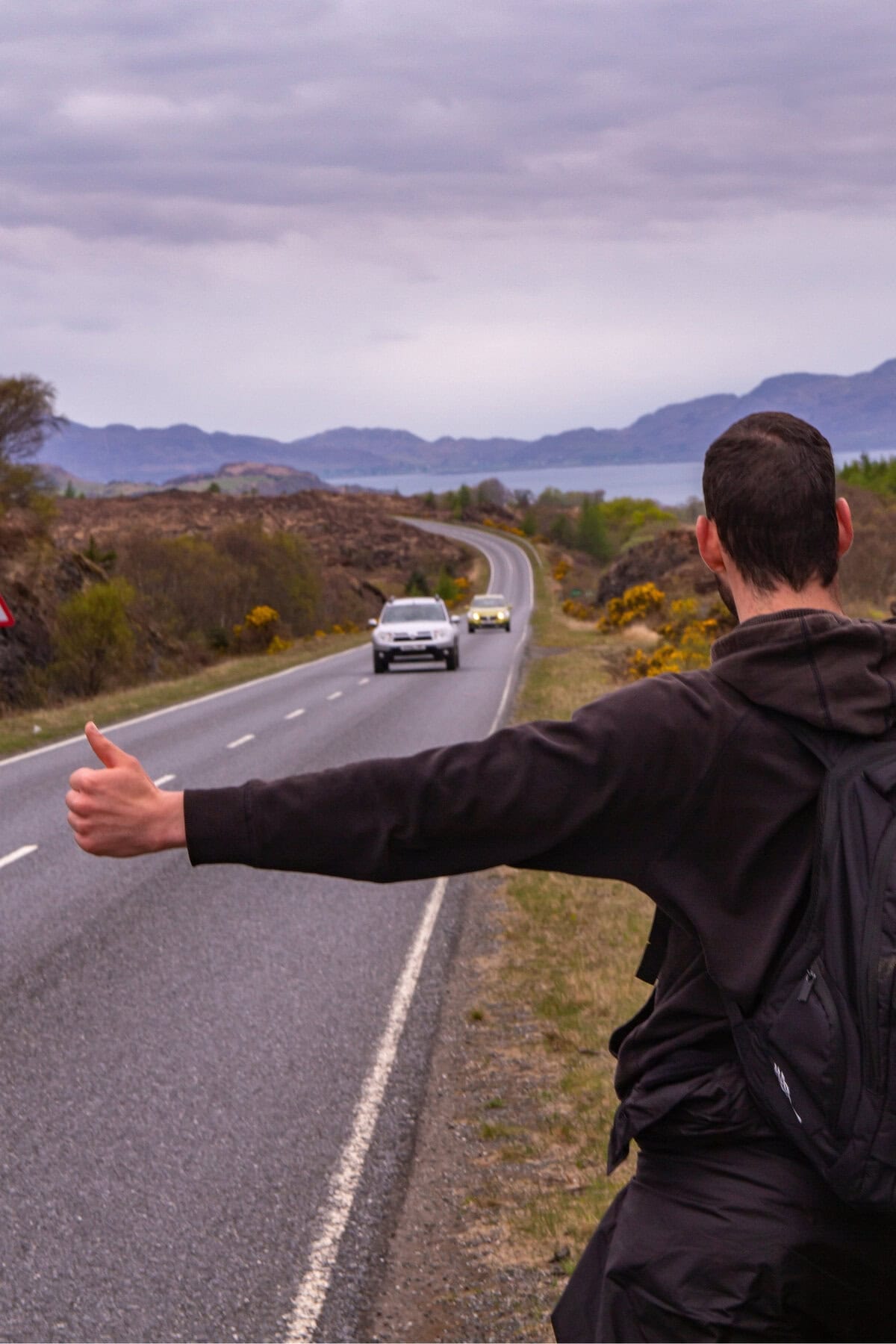
🚨That said, I’m very aware that hitchhiking is much more dangerous and risky for women than it is for men. So while I totally recommend hitchhiking for men, and while I have female friends who’ve hitchhiked solo in Scotland, I can’t really recommend solo female hitchhiking (because I don’t have personal lived experience of it).
License requirements for driving in Scotland
I won’t go through all the variations and computations here, cos no-one wants to read through an exhaustive list of all the world’s different driving licenses 🤷
… but, in general, licenses from the UK, EU, EEA, the US, Canada, Australia, and many other countries are usually accepted for short visits (and, in this context, ‘short’ usually means ‘up to 12 months’).
That said, in some rare cases, some people from some countries might need to get an international driving permit (IDP). This is usually in cases where the visitor’s license isn’t written in English. But, again, it’s pretty rare. So, in general, you should be able to drive on your license, wherever you’re from.
👉 To check for sure, here’s the official UK government website section on driving in Great Britain on a non-GB license.
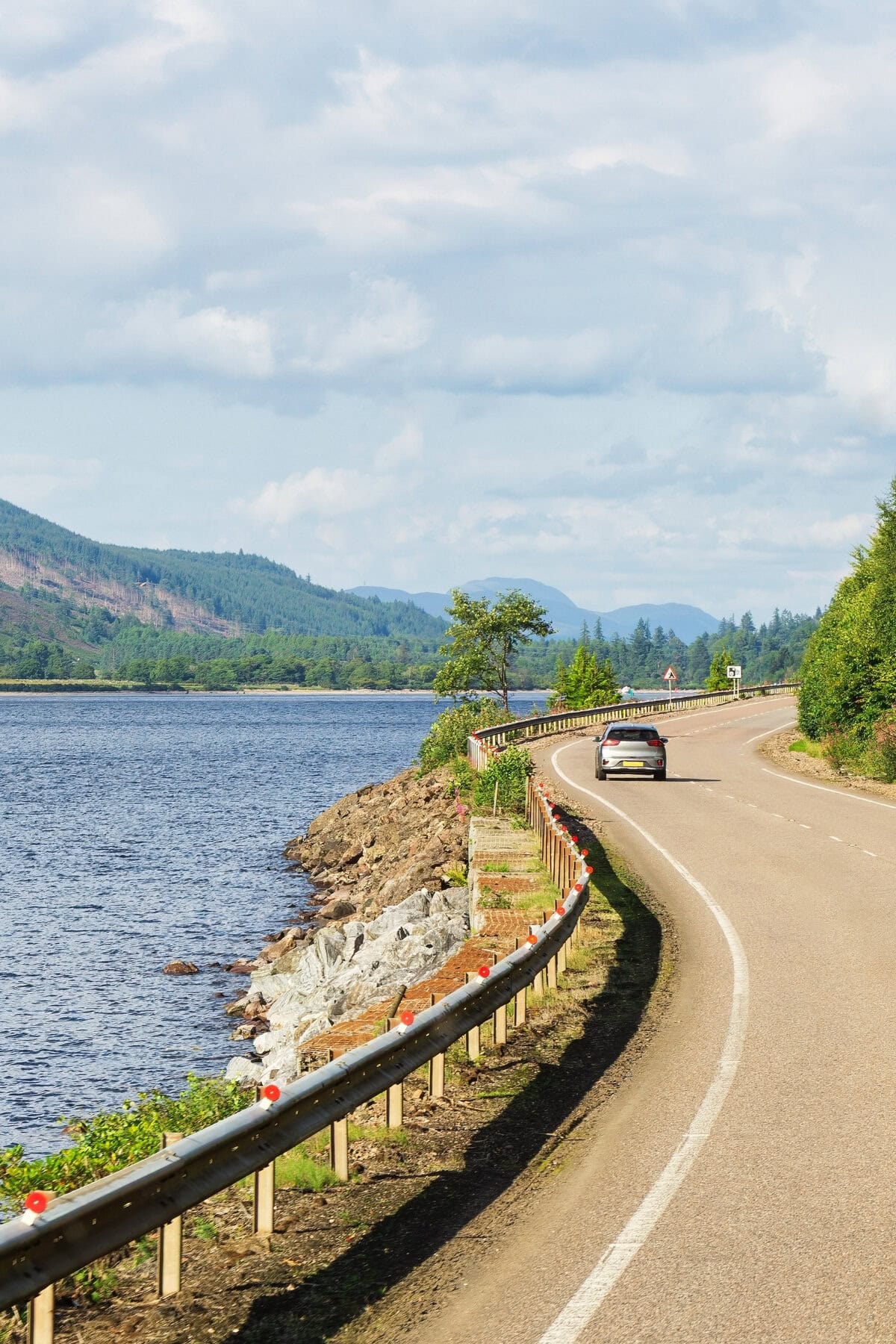
In the UK, you can drive cars and motorcycles from the age of 17. So, if you have a valid license but you aren’t yet 17, you won’t be able to legally drive in England… even if that license is valid and accepted in your home country.❌
💸 If you BUY a car in Scotland (and don’t just hire one), you’ll need to pay road tax, and have your car undergo a service (which, in the UK, is called an ‘MOT’). But it’s very unlikely you’ll be buying a car, so I won’t bother with any more detail on that.
Getting a rental car for driving in Scotland
When you try to hire a car in Scotland, you’ll find LOADS of the hire-car providers you’ve heard of (like AVIS, Europcar, and Enterprise). You’ll also find plenty of places to hire those cars… both rurally, and in cities (and close to airports and train stations).
But I wouldn’t bother with any of them. Instead, it’s best and easiest to just use DiscoverCars.com. They’re basically a rental hub who centralize all of the 500+ providers you can hire cars from (including the big names you’ve heard of, and smaller local names you haven’t).
🤑 They have very low prices (at the time of writing this guide, you can hire a car for a week in Scotland for less than £100), they offer regular sales and discounts, they have LOADS of pickup points, the customer service is good, and the website is easy to use.
The VAST majority of UK cars are manual transmission, NOT automatic transmission. But on DiscoverCars.com, you can use the filter list on the left-hand side of the site to find automatic cars (if that’s what you’re looking for!).
📚 When driving in the UK, you also need valid insurance. When you hire your car, you can buy your insurance from the provider at the same time. If you want something cheaper or more comprehensive, use an online tool; the best tool I know of is Moneymaxim (which is managed by UK frugality expert Martin Lewis!).
Driving on the left in Scotland (and roundabouts in Scotland)
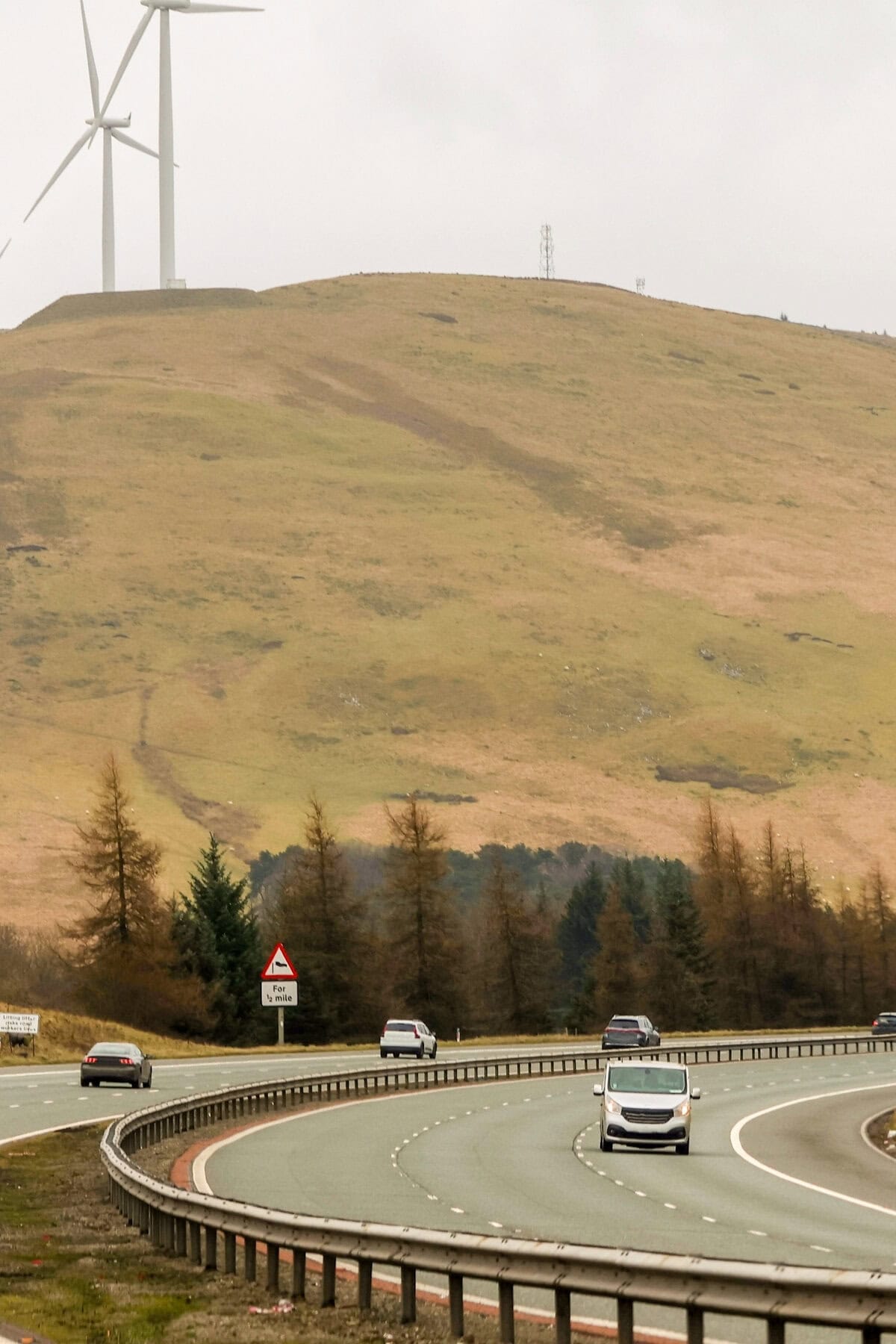
In the UK (including in Scotland), we drive on the left 🚘
All pretty simple, but it can take a little while for your brain to adjust. So if you’ve never before driven on the left, go find some empty roads to practise on before you head out for a real drive (and be extra careful!).
🛞 When you hit a roundabout* (and, yep, there are LOTS of roundabouts in Scotland, especially in the more built-up urban areas), you give priority to the right. So if there’s a car coming in the exit immediately right of you, you let them come.
*btw, when I say ‘roundabout,’ I’m talking about what you might instead know as ‘traffic circles’ or ‘rotaries.’
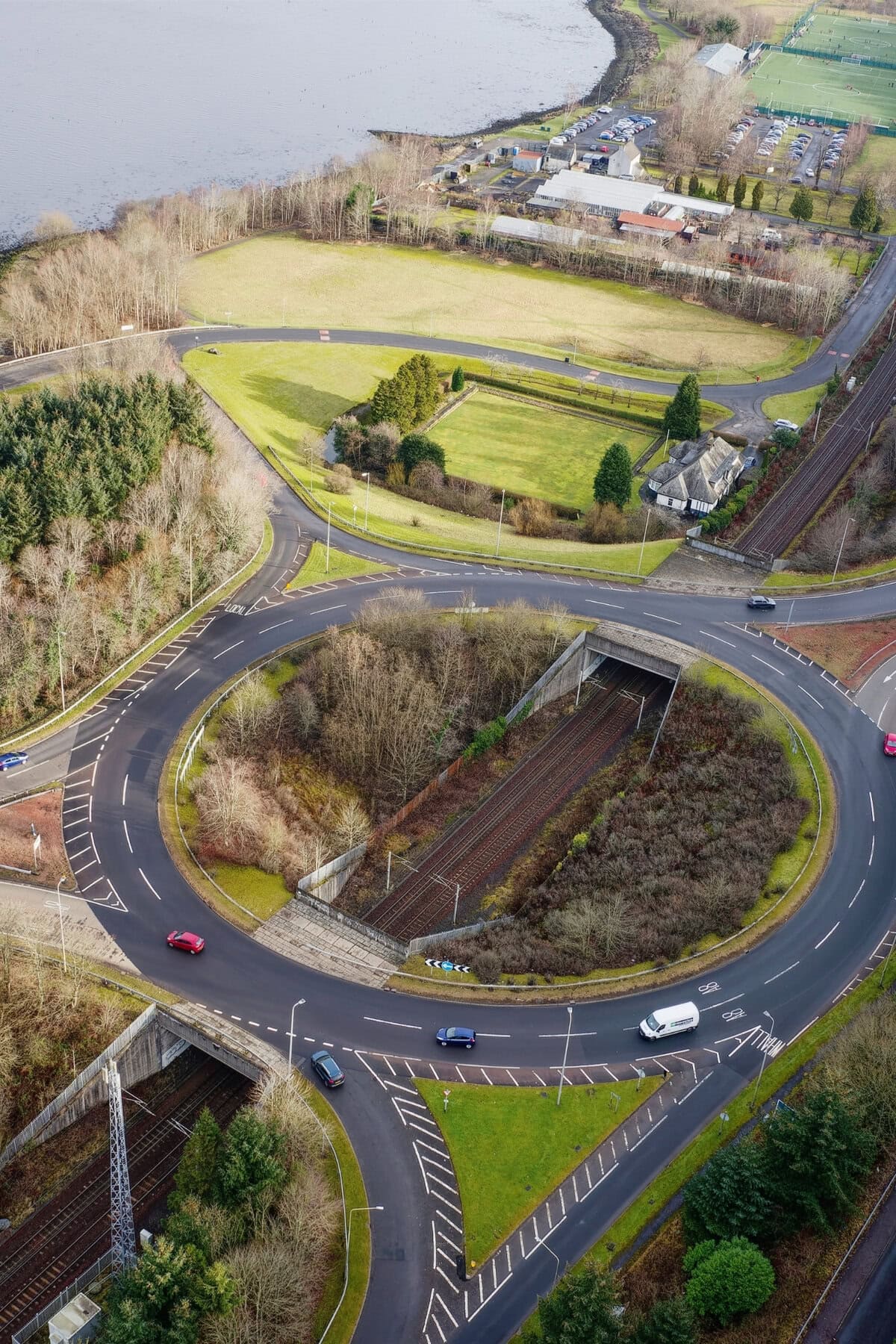
On bigger roundabouts, the flow of traffic is instead managed by stoplights. It’s easy to know whether or not that’s the case (cos, there’ll either be stoplights… or there won’t be stoplights) 🔴
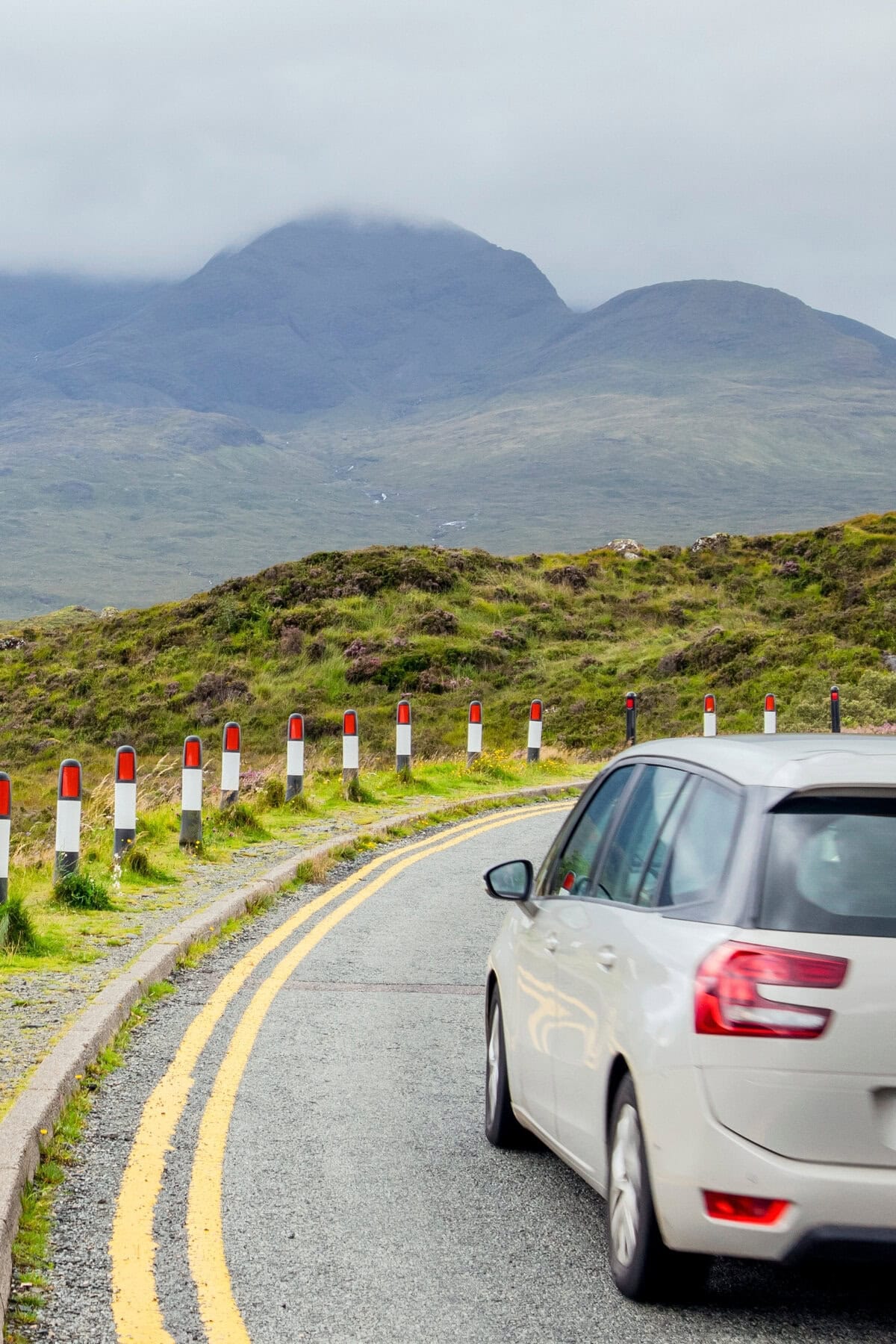
🌳 When you head out on rural small roads (or as we call them in the UK, ‘country roads’), they can be VERY narrow. If they are very narrow, stick tightly to the left side of the road. People on these roads often drive faster than they should 😬
Single-track roads in Scotland
As you head further north and further rural, you’ll find LOTS of single-track roads.
These roads allow traffic in both directions, BUT only have enough width for one car to pass through at any one time. Weird.
… but, to deal with that tricky arrangement, they also have ‘passing places.’
These designated passing places are designed to deal with the flow of traffic, and they’re very frequent and easy to spot.
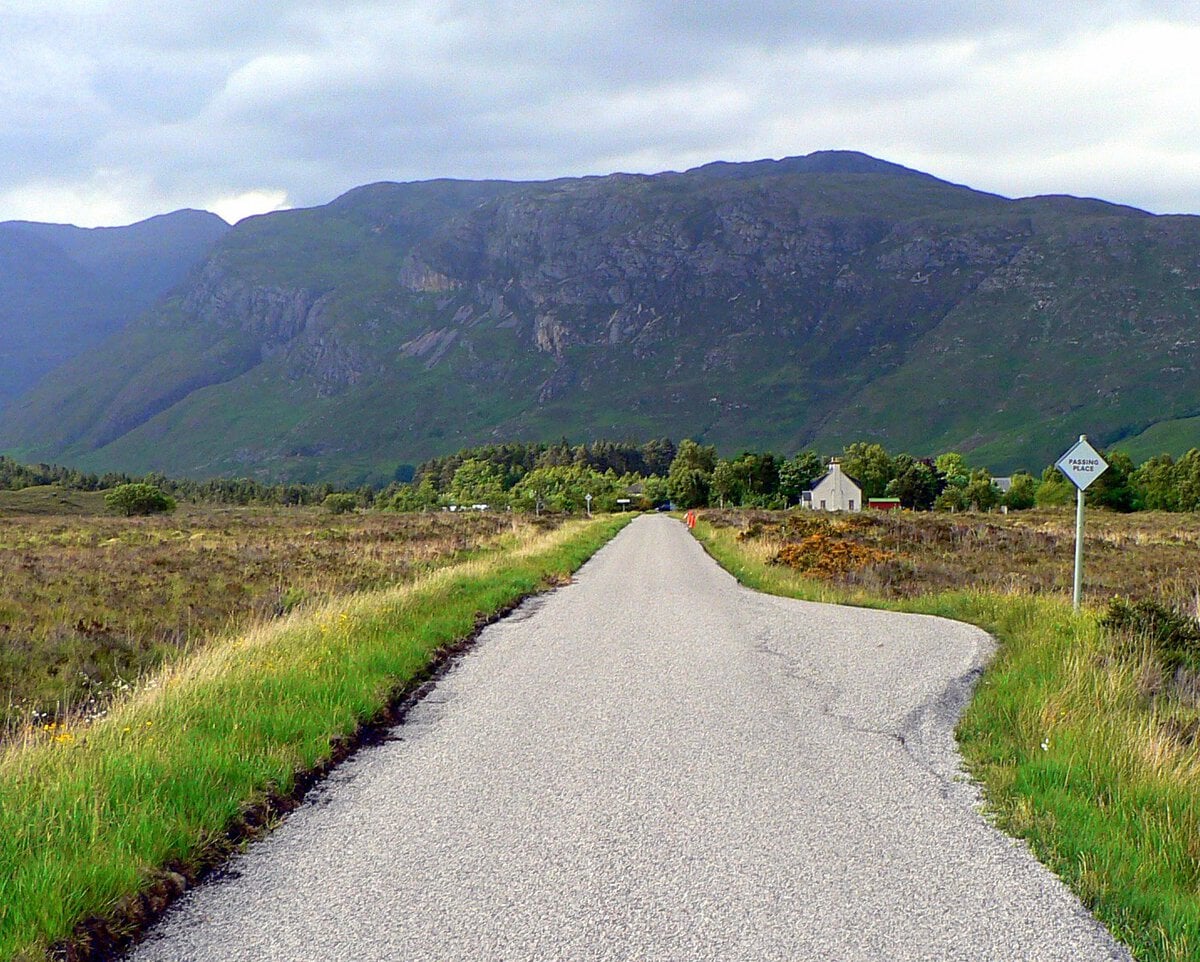
So, if you’re driving down a single-track road, and a car comes towards you, either you or them will have to pull into a passing place, to allow the other driver to pass. If the nearest passing place is on your side (even if it’s behind you), it’s your job to pull in.
It all sounds a bit awkward and tricky, but it’s actually pretty simple and manageable in practice. If you’re a confident driver, you’ll be fine 👍
An important note: these passing places are absolutely NOT for parking; even if you’re ‘only’ parking for 5 minutes while you go and snap a photo of some cute Highland cows or whatever.
Some stupid tourists do use them for parking, which causes traffic and accidents and other problems.
So just don’t bother 👍
Speed limits and speed cameras in Scotland
Scottish speed limits vary a lot based on the type of road you’re driving on… and speed limits are very strictly enforced.
Btw, an important note: whenever you see a speed or distance noted on a Scottish sign, it’s in MILES per hour. Your car display will also be showing your speed in MILES per hour 💨
In general, the types of speed limits you can expect according to road type are:
- Roads next to schools or busy residential areas (20mph)
- Built-up areas (30mph)
- Single carriageway (60mph)
- Dual carriageway (70mph)
⚠️ It’s important to note that these speed limits are MAXIMUMS. Even if you’re going 21mph in a 20mph zone, you could be in trouble.
If you break these limits, there’s a very good chance you’ll get in trouble with the police 🚨
Driving conditions in Scotland
- If the weather looks like it might be snowy or slippy or flooded, you’ll want to think twice about driving. In that case, check the weather reports on the official Met Office website; if you should expect ice or other bad conditions, they’ll tell you.
- In rural places, sheep and deer could run out onto the road. Be prepared. And if you see a road sign with a deer or a sheep on it, it’s not a gimmick; it actually means you should look out.
- UK roads are good compared to most of the world… but they have more potholes than you’ll probably be expecting; especially in rural places. Drive with caution, especially if a road has puddles (those puddles might be hiding potholes).
- Some parts of Scotland are VERY hilly. If you head rural, you’ll need to be confident with navigating hills in manual transmission… or you’ll need to instead get an automatic.
- To find parking places, use Google Maps, or ask locals. There are some car-parking apps, but I’ve never found any of them to be better, more reliable, or more user-friendly than simple ol’ Google maps. Simply type ‘parking lot’ or ‘car park’ or ‘parking space,’ search in your local area, and you’ll find info (and usually reviews). Some parking spots are free, some are cash-only, some can be booked using apps.
Getting gas in Scotland
⛽ First of all, ‘gas’ is called ‘petrol.’ If you pull up in Scotland and ask someone where the nearest ‘gas station’ is, they’ll look at you like you’re an alien.
In cities, you’ll find petrol stations EVERYWHERE.
In rural places, you’ll find WAY FEWER petrol stations, and you should plan accordingly. If you’re in a rural area and you see a petrol station, completely fill up your tank. If you don’t, you might regret it. Trust me, I’ve been there.
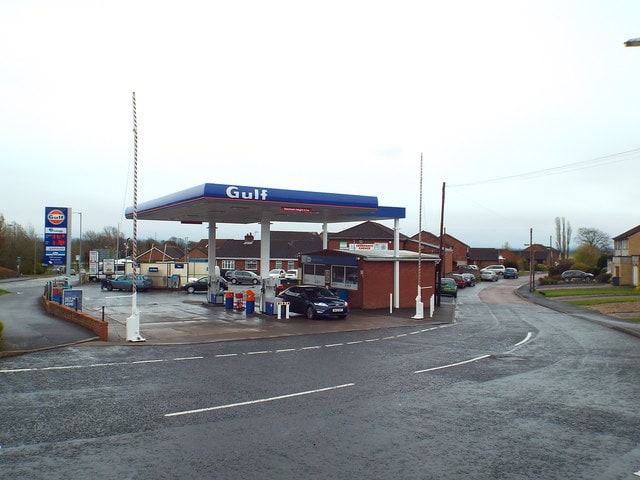
📅 Some petrol stations will close on Sundays (or have shortened opening hours), and prices might be a bit higher in rural places.
To find petrol stations, simply type ‘petrol station’ into Google Maps, and you’ll be shown the ones closest to you. Easy!
Sat navs and road signs in Scotland
All Scottish road signs are written in English.
But in some cases (more north, more rural, and on islands), road signs might also be written in Gaelic (which was once the most common language in Scotland). But even in those rare cases, the signs will also have the English translations of any and all words.
🟢 Most Scottish road signs are green.
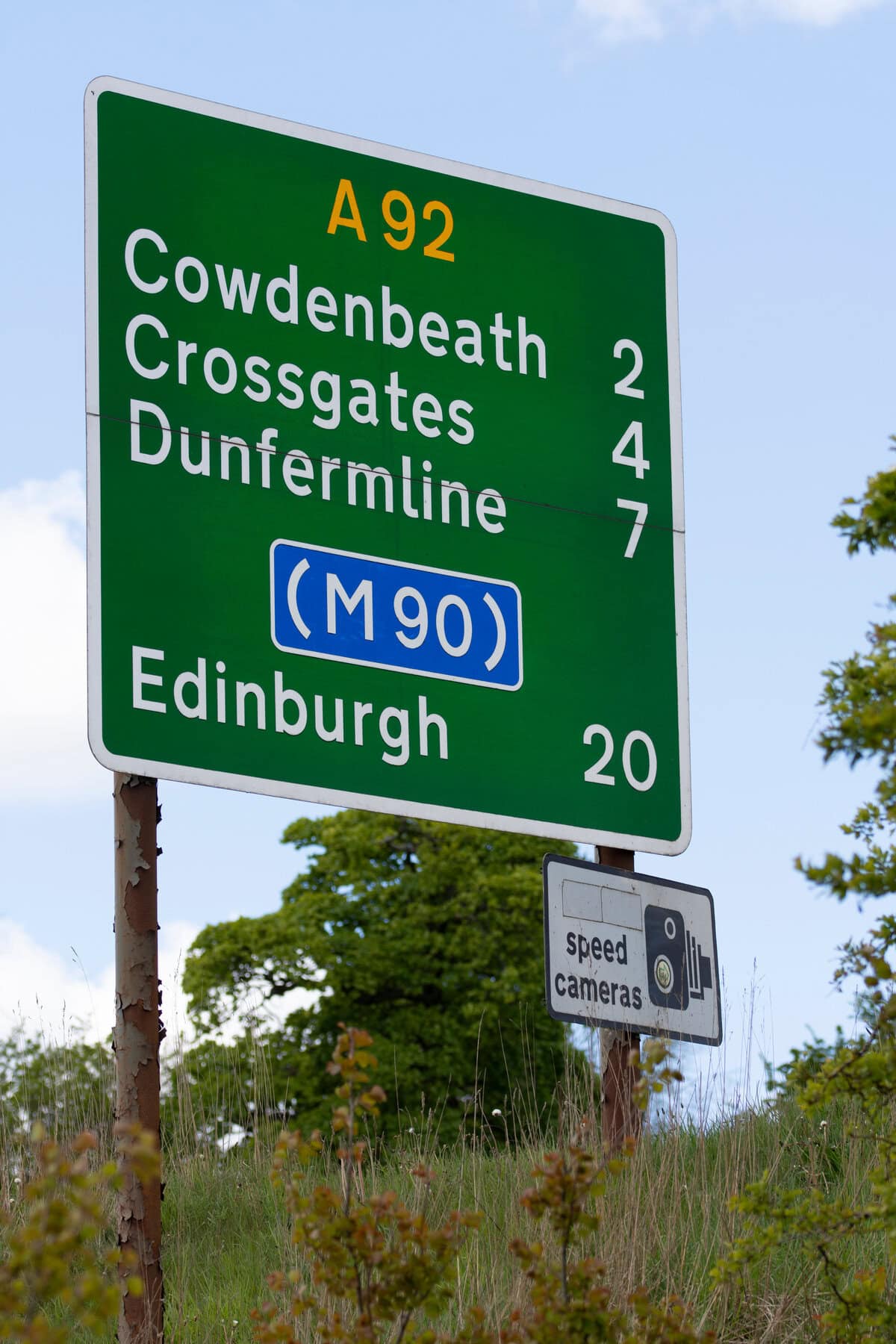
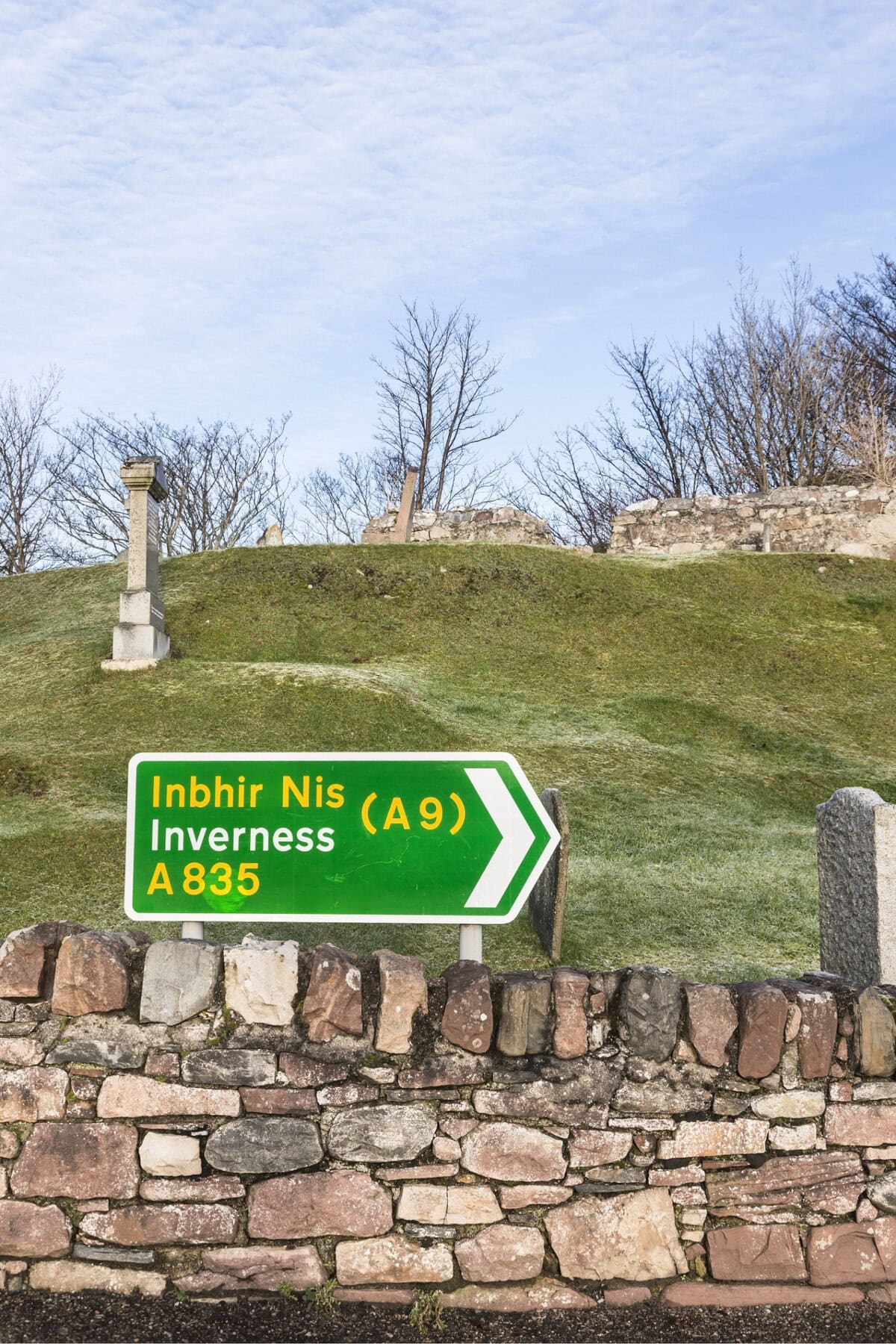
🔵 If you see a blue sign, that usually means you’re on a motorway, or approaching a motorway (a ‘motorway’ is what some nations refer to as a ‘highway’ or ‘autobahn’).
🟤 Brown road signs are used for tourist infrastructure. These brown signs (often also featuring a blue-and-white thistle symbol) will point out things like viewpoints, scenic roads, tourist attractions, and that sort of stuff.
🔢 Again: whenever you see a distance number written on a road sign, that number is MILES, not kilometers.
Google Maps is absolutely fine for navigating; you don’t need any other type of satnav tool. If you want to be super-cautious, you might also want to buy a paper map or a road atlas (you can buy these online, and in tourist stores and gas stations). But most people don’t bother 🤷
Who to call if you have an accident while driving in Scotland
🚨 If you need to call any emergency services in case of an any accident, the number is 999. You can use this number for police, the fire service, and the ambulance service.
If you instead see something non-urgent (or want to report something non-urgent), call 111.
🚙 If your car breaks down and you need mechanical help, call whatever number is listed in your rental agreement. This will be different depending on who you’ve hired your car from.
The best road trips in Scotland
Finally, we’re at the exciting part! 🎉
Scotland is one of the world’s best countries for road trips. For loads of reasons:
- You’ll find a bunch of official (and officially-waymarked) road trips
- … but even though they’re ‘official,’ these trips are still super-adventurous
- It’s home to the North Coast 500, the best road trip I’ve ever been on ANYWHERE
- Despite being relatively small, Scotland’s VERY rural—so you can get remote quickly
- It’s also very easy to find info online about these road trips, to plan where you’re going
So, with all that said, some of our favorite Scottish road trips are:
- Snow Roads Scenic Route: riding through some of Scotland’s most mountainous areas, this hits Cairngorms National Park (the biggest national park in the UK), and the highest public road in Britain. It’s named after the weather conditions—these roads are usually the first in the UK to get winter snow. Brimming with massive switchbacks and tight turns, the Snow Roads Scenic Route is packed with viewpoints and panoramas.
- North Coast 500: I’ve already mentioned this route above, but it’s one of the planet’s top road trips. Measuring 500 miles (800km), it hits the northern mainland coast, and the northern parts of the western and eastern coasts. Possibly the best adventure I’ve ever been on, anywhere in the world.
- The Heart 200: this route runs right through the heart of the nation, close to Glasgow, Edinburgh, and Dundee. But, uniquely, it heads to under-the-radar locations in this region. Ideal for seeing lesser-known stuff without having to get super-rural!
Before You Go
🏴 So, that’s everything you need to know about driving in Scotland!
To sum up, our final top tips are:
- Remember to drive on the left
- Get familiar with roundabouts and how to navigate them
- Single-track roads are strange at first, but you’ll get used to them
- Hire a car from DiscoverCars.com—they’re affordable, simple, and reliable
… and if you have time, make sure you take some of the nation’s official road trips—especially the North Coast 500! 🚘
For more adventuring in and around Scotland, here are:
- 20+ strange places in Scotland you didn’t know about
- Everything you need to know about the world’s shortest flight
- 16 must-see gems in the Scottish Highlands (these are all local favorites)
Thanks for reading, thanks for choosing Travelness, and we’ll see you again soon. Enjoy exploring Scotland and keep scrolling down this page! 👋