Coming up: ayes, naws, pieces, purity, some quick language lessons, a completely different way to say the word ‘yes,’ common mispronunciations, why there’s no time for flamboyance, and 28 Scottish slang & phrases every visitor should know.
🏴 Scottish slang is very different from English slang and American slang 🏴
Here, you’ll find different words, different dialects, and VERY different accents 💬
- Some Scottish slang is influenced by Gaelic (a Celtic language native to Scotland—and once the nation’s main language)
- Some comes from Old English (in some ways very different to modern-day English)
- Some is influenced by Nordic languages
- Some comes from Viking invasions
- Some comes from other places
… so, overall, Scottish dialect and pronunciations are very unique. They share some similarities with far-northern English, and some Irish. But if you’re not from Ireland or far-northern England, you’ll find A LOT of Scottish dialect and language confusing.
Interestingly, Scottish English isn’t always just ‘English with an accent.’ It has its own vocabulary, its own rhythms, and LOADS of different influences. The result is a big charming unusual mix, which is often baffling even to most other Brits.😮
So, coming up: here are 28 Scottish slang & phrases every visitor should know (and some helpful tips and advice). Bring your notepad! 📚
Scottish Slang & Phrases Every Visitor Should Know
Aye
- What it means: ‘yes’
- How common it is: extremely
The most important Scottish word.
You’ll hear it constantly, from cafes to construction sites 🌍
Pronounced like the word ‘eye,’ you’ll very rarely hear Scottish people actually say ‘yes’ when they’re talking to each other*.
(*but they might say it when talking to you. They’re accommodating like that 😇)
Naw
- What it means: ‘no’
- How common it is: extremely
‘Naw’ sounds like ‘no.’ But not quite; it has a bit more of a vowel-y flourish.
Whatever it sounds like, it means the opposite of ‘yes.’
This ‘naw’ is often stretched into ‘naaaaw’ when someone really means it ❌
Wee
- What it means: ‘small’
- How common it is: very
If you have a small sandwich, you have a ‘wee’ sandwich.
If a person is small, they are ‘wee.’
If a drive is a small drive, it’s a ‘wee’ drive.
I’m sure you get the idea 🤏
That said: you have to be careful with this word. Because, get this… ‘wee’ also works as a sort of ‘softener’ in Scottish conversation. Basically, Scottish people might put ‘wee’ in front of any word to make it sound sort of nicer, or softer, or cuter, or more acceptable. A ‘wee’ vacation. A ‘wee’ snack. A ‘wee’ year-long sabbatical from work.
So, sometimes, it’s hard to work out whether Scottish people actually really mean ‘wee’ or ‘wee.’ Eventually, you sort of pick up an instinct for this sort of thing. In the meantime, you might just be a bit confused 🤷
Blether
- What it means: ‘chat’
- How common it is: moderately
Having a blether is having a chat; a casual conversation 💬
If it’s the type of friendly pointless chat you would have in a pub or a supermarket or while waiting for a bus, you can probably class it as a blether. Simple.
Mind
- What it means: NOT ‘mind’
- How common it is: very
Much of the time, this actually means ‘remember’… and doesn’t actually mean ‘mind.’
Lots of people get this confused. But, now, cos you’ve read this, you don’t have to 👍
Stay
- What it means: ‘live’
- How common it is: very
If someone asks you ‘where do you stay?’, they might not mean ‘where are you staying right now while you’re on vacation?’
… cos they might actually mean ‘where do you live?’
Like, as in: permanently 🏠
Confusing, I know.
Pure
- What it means: ‘extremely’
- How common it is: very
This is MASSIVELY common in southern Scotland, and far-northern England.
If you’re very hungry, you’re pure hungry. If you’re very tired, you’re pure tired. If you’re very late, you’re pure late. And so on and so on.
Deed
- What it means: ‘extremely’
- How common it is: very
Everything I’ve just said about ‘pure,’ I could also say about ‘deed.’ There—that was nice and easy, wasn’t it 👍
(btw: ‘deed’ is the Scottish pronunciation of the word ‘dead’).
Ken
- What it means: ‘know’ or ‘understand’
- How common it is: moderately, but much more common in southern Scotland
‘D’ye ken?’ basically means ‘Do you know?’
‘A ken’ means ‘I know.’ 🧠
Among working-class people, this is SUPER common. Among others, not so much.
Wean
- What it means: ‘child’
- How common it is: moderately
Pronounced sort of like ‘ween,’ but not quite 🧒
In some parts of Scotland (mainly the Scottish Borders*; the area bordering northern England), you might instead hear the word ‘bairn’ (which also means child).
‘Bairn’ is also VERY common in Newcastle**.
*For much more on the Scottish Borders, here’s our essential travel guide to the region.
**… and for much more on Newcastle, here are…
- 13 reasons why you need to visit Newcastle and northeast England
- 13 top cruises from Newcastle (because the city has a big port)
- The 15 best beaches near Newcastle
- Newcastle’s top 5 neighborhoods
- The 11 best tours in Newcastle
Braw
- What it means: ‘good’
- How common it is: not too common these days
If a word can be used for ‘good,’ (e.g. ‘excellent,’ ‘great,’ ‘brilliant,’ ‘amazing’), then it can and often will be replaced with the word ‘braw.’ 🟢
You can have a ‘braw’ time, a ‘braw’ hike, a ‘braw’ meal, and so on.
Scran
- What it means: ‘food’ or ‘eat’
- How common it is: pretty common
If you ‘go for some scran,’ you go for some food 😋
If you ‘have a scran,’ you eat.
Again, this one is also very common in northern England (and the further north you go in England, the more common it becomes).
Messages
- What it means: ‘groceries,’ or ‘shopping’
- How common it is: not so much anymore
If someone goes to the store to ‘pick up some messages,’ it means they’re going to buy some groceries.
In general, you’ll probably only hear older people say this 🧓

Knackered
- What it means: ‘extremely tired’ (or ‘broken’)
- How common it is: very
Most Scottish people will permanently tell you they’re knackered. That’s the modern world I suppose 😬
I’m knackered as I write this. You’re probably knackered as you read it.
Sidenote: ‘knackered’ is also commonly used as the word for ‘broken’. If someone’s car is ‘knackered,’ it’s not working properly. If someone’s toaster is ‘knackered,’ it’s no longer making toast properly. Etc etc.
… you should be able to work out which knackered is intended, based upon if a person is talking about a human, or an inanimate object. If you can’t work it out for yourself, your brain is probably knackered. 😵
Piece
- What it means: ‘sandwich’ (or sometimes a packed lunch)
- How common it is: very
A piece is usually always a sandwich (and the filling of the sandwich is irrelevant) 🥪
Occasionally, according to a couple of people I’ve asked, a person might refer to a packed lunch as a piece, but that’s pretty rare. And I haven’t ever personally heard it.
Chuffed
- What it means: ‘very happy’
- How common it is: very
If you’re ‘chuffed,’ you’re very happy, or very proud, or very amazed. Easy! 🥳
Minging
- What it means: anything that could be interpreted as ‘horrid’ or ‘disgusting’ or ‘ugly’
- How common it is: very
If something is ugly, it’s ‘minging.’
If something is smelly, it’s ‘minging.’
If the weather is bad, it’s ‘minging.’
I’m sure you get the point 🤢
Greet
- What it means: it DOESN’T mean ‘greet’
- How common it is: very
In Scotland, to ‘greet’ is actually to cry 😢
If you ‘greet,’ you cry.
If you are ‘greeting,’ you are crying.
If you are ‘gonna greet,’ you’re going to cry. Etc.
Dreich
- What it means: it’s related to bad weather
- How common it is: not too common anymore
‘Dreich’ is basically just a way to describe dull, grey, miserable weather.
(and Scotland often serves up dull, grey, miserable weather).
For example, if someone says that today is ‘dreich,’ or that the weather is ‘dreich,’ it means the weather is bad 🌧️
How no?
- What it means: confusingly, this means ‘why?’ or ‘why not?’
- How common it is: moderately
In any context where you would say ‘why not?’ or ‘why don’t you like it?’ or ‘why don’t you want to do it?’ (or anything resembling any of those types of questions)…
… some Scottish people might instead say ‘how no?’ 🤔
And in some other contexts, some Scottish people will also say ‘how no?’ to simply mean ‘why?’
To complicate things even further, in some parts of Scotland, people will simply use the word ‘how?’ when they actually mean ‘why?’
I told you Scottish language is sometimes complicated 🤷
Gallus
- What it means: ‘mischievous’ or ‘cheeky’
- How common it is: in and around Glasgow, very. Everywhere else, not very
If a person is a bit rude or risky in a charming way, they’re ‘gallus.’
Glaikit
- What it means: ‘stupid’ or ‘ignorant’
- How common it is: very common in working-class areas
If a person is stupid, or silly, or does something mindless or foolish, they are ‘glaikit.’
It’s a relatively non-offensive term—sort of like a semi-friendly way to insult someone.
Weesht
- What it means: ‘ssssh!’
- How common it is: not too common anymore
If you want to tell someone to be quiet, you might say ‘ssssh!’
… but in Scotland, people will sometimes instead say ‘weesht.’ It’s basically the Scottish way to say ‘be quiet!’ 🤫
Skint
- What it means: having no money
- How common it is: very
When and where an American would describe themselves as ‘broke,’ a Scottish person (or a person from most of the UK) would instead describe themselves as ‘skint’ 💰
Claes
- What it means: ‘clothes’
- How common it is: very
👗 This isn’t even really a slang word—it’s just the common Scottish mispronunciation of the word ‘clothes.’ It’s likely derived from the Old English word for clothes (‘clapas’).
Loch
- What it means: ‘lake’
- How common it is: very
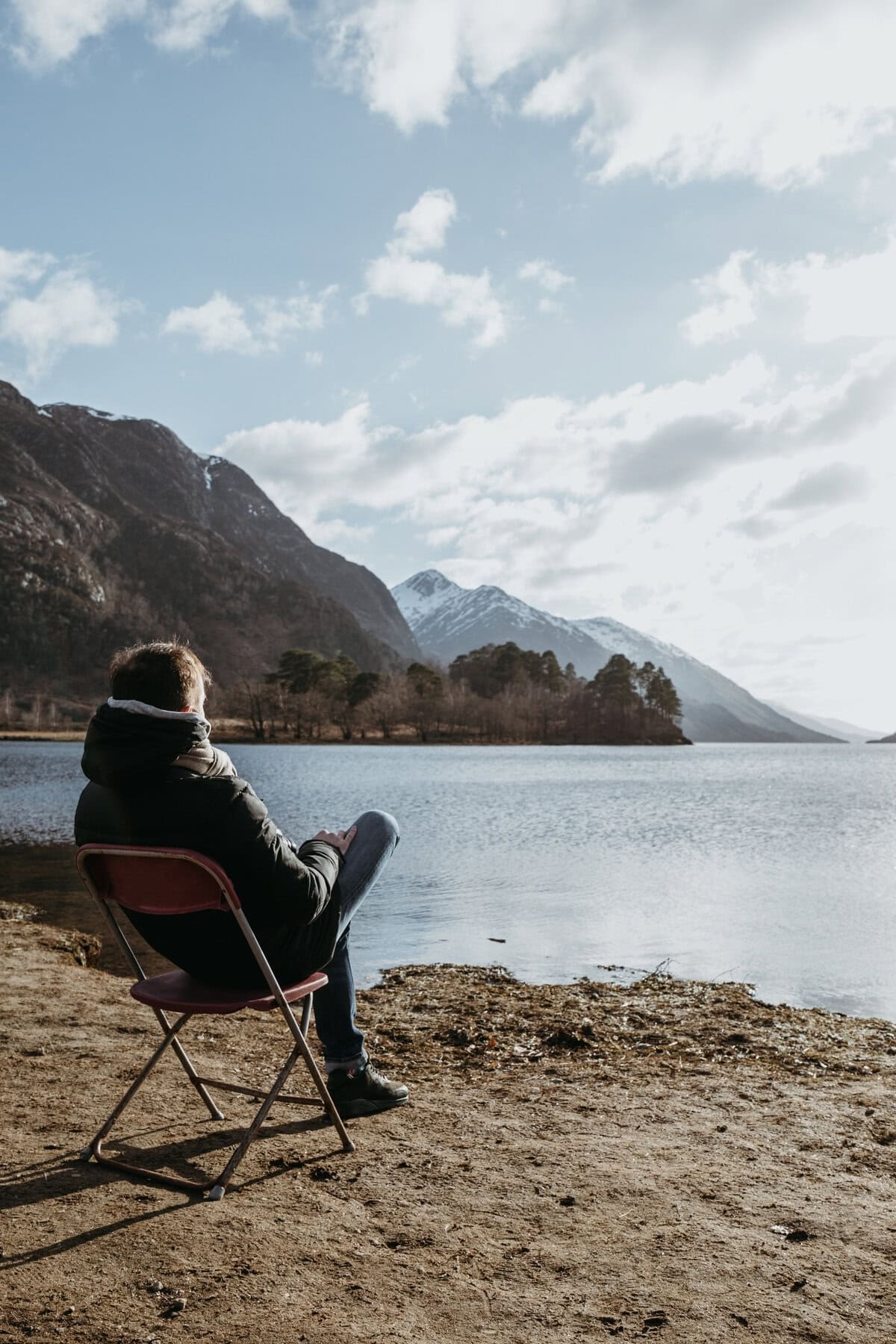
There are over 30,000(!) lakes in Scotland.
… but in Scotland, a ‘lake’ is ALWAYS called a ‘loch.’ So you’ll hear the word ‘loch’ A LOT.
… so that’s why Loch Ness is a lake, why Loch Lomond is a lake, why Loch Fyne is a lake, and so on and so on 🚣
Glen
- What it means: ‘valley’
- How common it is: very
🌳 A ‘glen’ is a valley.
… so, ‘Glen Coe’ is ‘Valley Coe.’ ‘The Great Glen’ is ‘The Great Valley.’ And so on.
Much like the word ‘loch’ (and much like the word ‘isle,’ coming next), the word ‘glen’ isn’t considered slang at all—and you won’t hear ANY Scottish people using the words ‘lake’ or ‘valley’ in relation to Scotland.
Isle
- What it means: ‘island’
- How common it is: very
… and here’s ANOTHER outdoor word you’ll need to know (e.g., for the Isle of Skye, the Isle of Arran, and all the other hundreds of islands surrounding mainland Scotland).

Admittedly, you will sometimes hear the word ‘island’ in Scotland, but ‘isle’ is much more common 🌴
Common mispronunciations (and common mistakes)
- Edinburgh is NOT pronounced ‘Edin-burg’; it’s actually pronounced ‘Edin-burra.’ Among Brits, the exaggerated American way of mispronouncing ‘Edinburgh’ is actually a bit of an in-joke 😬 So don’t make the same mistake.
- Oh, and to add to the above; any time you see the suffix ‘burg,’ it’s pronounced ‘burra.’ So Musselburgh is pronounced ‘Mussel-burra’, and Jedburgh is pronounced ‘Jed-burra’… and so on and so on.
- Super confusingly, the town of Milngavie is pronounced ‘Mul-guy.’ That said, you’ll probably only be visiting Milngavie if you’re doing the West Highland Way 🥾
- This one’s simple, but lots of people (especially Americans) still get it wrong: ‘Glasgow’ is ‘Glaz-go.’
- Don’t say ‘top of the morning.’ That’s an Irish phrase, not a Scottish one. And even in Ireland, it’s just an outdated cliché. So, wherever you are, don’t bother saying it 🤷
- The Borders town of Hawick isn’t pronounced ‘Haw-ick.’ It’s ‘Hoyk.’ Weird eh.
The Scottish communication style (and come cultural context)
- Depending on where you’re from (🇺🇲 Americans, we’re looking at you), you might initially find the Scottish way of communicating a bit jarring. Humor is very dry, insults are a way to bond, people love to tease each other, and self-deprecation is basically mandatory. Scottish people have no time for flamboyance, or unnecessary enthusiasm, or celebrating themselves. They’re direct, and they like to laugh at everything.
- … but underneath what you might interpret as a moody facade, Scottish people are actually some of the planet’s friendliest folks. So, it’s important to remember: what you might initially perceive as gruffness is actually just a little bit of a show 😊
- If you’re not from Scotland, don’t bother trying to do the Scottish accent. You’ll probably get it wrong, you’ll probably irritate everybody, and you’ll probably look stupid. Here are 20 more things you shouldn’t say to Scottish people.
- You’ll find a surprising number of cultural differences in Scotland, across different cities and regions (and especially on different islands); and the longer you stay, the longer you’ll notice them. I won’t go into all the details here, because they’re largely superficial to tourists. But, two things: 1) in general, the further north you go, the harder people become to understand 2) if you want to meet the most proud working-class ‘real’ Scottish people, Glasgow is your best option 💡
- At first, the Scottish accent is confusing. But that’s part of its charm. Don’t let it throw you off; just ask people to slow down, and they will. Soon, you’ll fall in love with it ♥️

Final Thoughts
And so, that’s us done! 🏴
They’re the 28 Scottish slang & phrases every visitor should know!
You probably won’t say any of them, cos you’re not a Scottish local (and people might look at you weird if you do) 🤷
… but when you do hear them (or when someone says them to you), at least you now know what you mean.
💬 To sum up, the ones most worth remembering are:
- ‘Aye’: this means ‘yes,’ and basically EVERYONE uses it
- ‘Dreich’: this one describes grey, miserable weather
- ‘Pure’ and ‘deed’: these both actually mean ‘very’
- ‘Scran’: which means ‘food’ or ‘eat’
- ‘Mind’: which actually means ‘remember’
- ‘How no?,’ which confusingly means ‘why?’ or ‘why not?’
- (and for any and all of your traveling, remember that a ‘lake’ is called a ‘loch,’ a ‘valley’ is called a ‘glen,’ and an island is (usually) called an ‘isle’)
🏴 For more underrated and unexpected pieces of Scottish advice, here are:
- 10 myths about Scotland that Americans can’t seem to shake
- 22 things you shouldn’t do while you’re in Scotland
- 25 reasons you need to visit Scotland
Thanks for reading, thanks for visiting Travelness, and we’ll see you again soon. Keep scrolling down this page! 👋