Coming up: strange cultures, proud locals, sea eagles, sandy beaches, surprisingly diverse places, lots of birds and sea life, British Isles you (probably) haven’t heard of, and the top 14 British islands for a weekend stay.
For island escapes, Britain is one of the best places on the planet—cos it’s home to thousands of little lumps of land. And these islands are SUPER diverse (in terms of landscape, people, history, heritage, and things to do).
But which are the best for a weekend stay? What can you do on each one? Which are best for which types of people? And just how many questions do I expect you to read in this paragraph?
Coming up—all that and much more. Here are the 14 best British islands for a weekend stay!

1. The Isle of Skye
Best for: (relatively) easy-to-access adventures, great hiking, and combining convenience with world-class beauty


Definitely Scotland’s most famous island*, and probably the UK’s most famous island.
(*and since Scotland has almost 800 islands, it takes some pretty impressive work to be the nation’s most famous)
Sitting on the west coast of Scotland, Skye is the nation’s best spot for getting the rough rugged rural Scottish experience, but in an accessible location (cos it’s connected to the mainland by a bridge, and it’s not too far north).

Much bigger than most tourists expect, you could spend weeks on the Isle of Skye…
… but since you only have a weekend, here’s what I suggest:
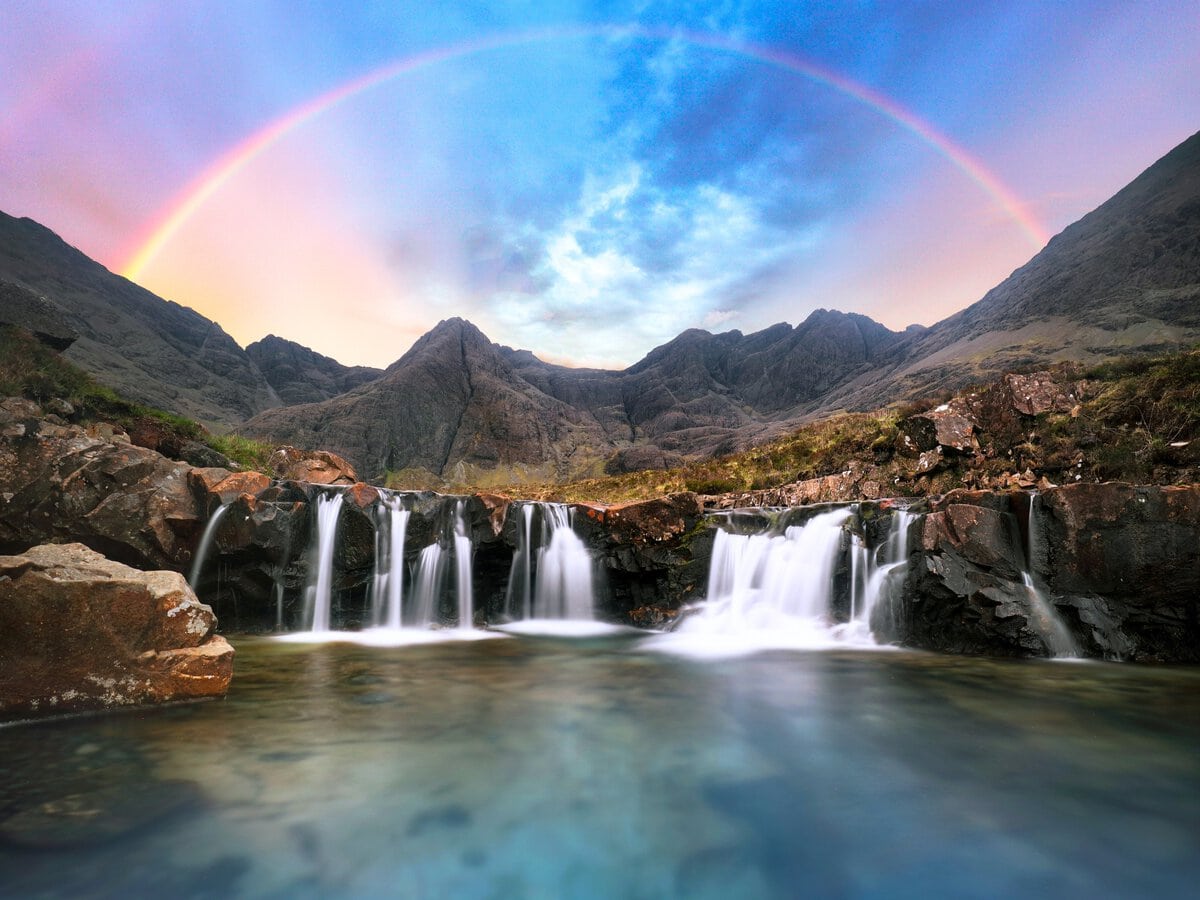
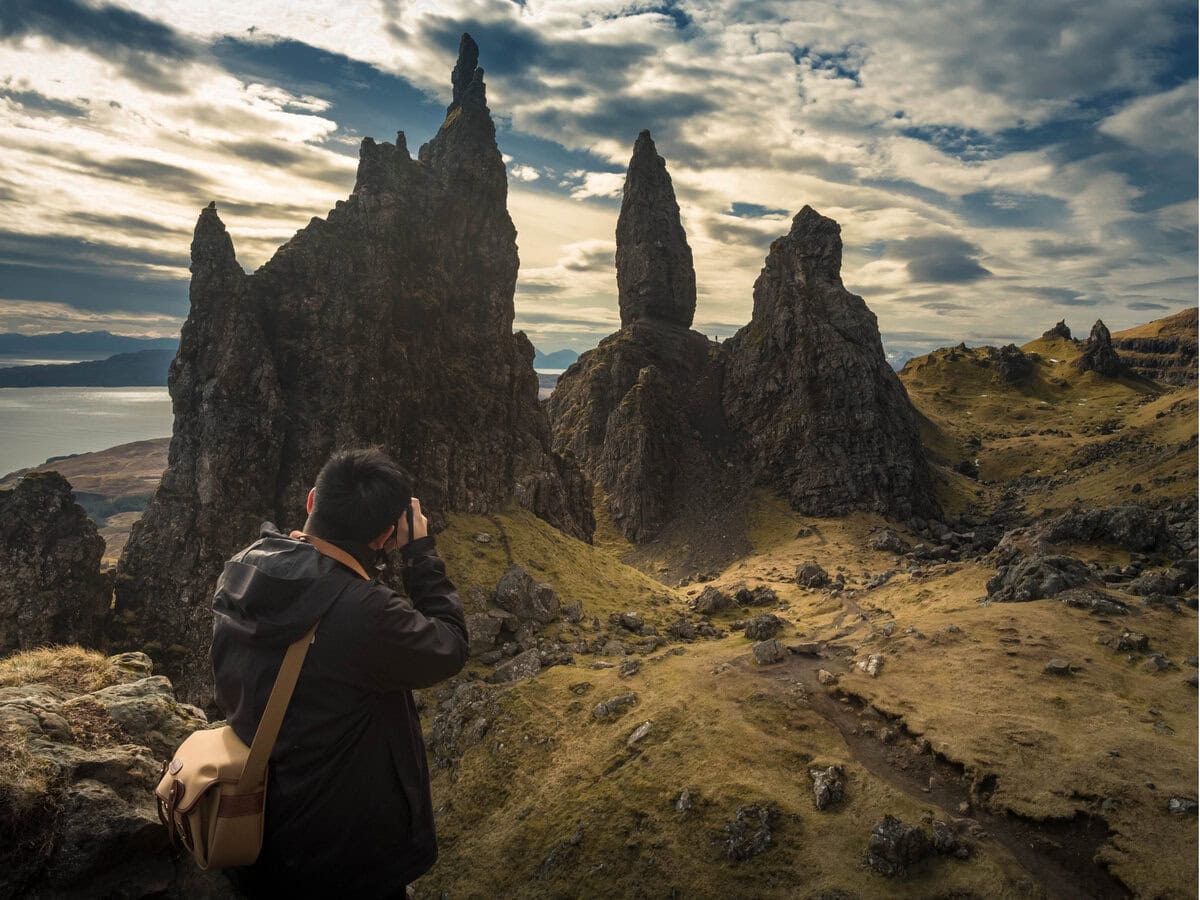
Stick to the Trotternish Peninsula, the most northeastern ‘lump’ of all the island’s fragmented chunks. Here, along an easy-to-drive loop-shaped road, you’ll find hiking spots (like the Quiraing and The Old Man of Storr), along with sandy beaches, interesting drives and landscapes, and the island’s capital of Portree. A perfect weekend.
For way more on the Isle of Skye:
Best Isle of Sky Tours
2. The Isle of Arran
Best for: seeing the entirety of a big(ish) Scottish island in just one weekend

The next-most-famous Scottish island!
Also sitting on the west coast of Scotland (and around 180 miles/290 km south of the Isle of Skye), people like referring to this island as ‘Scotland in miniature.’
(cos, all the things Scotland offers, Arran also offers)
Though the scenery here isn’t as dramatic or impressive as on the Isle of Skye, Arran is better for a weekend trip—it’s smaller, it’s easier to see the highlights in a couple of days, and you can drive around the island’s entire ring road over a weekend (if you hire a car).

Over a weekend, I’d:
- Hike Goatfell (the island’s biggest peak, its top measures in at 874 meters/2,867 feet)
- Walk a short stretch of the Arran Coastal Way (a loop hike around Arran’s perimeter)
- Head to Blackwaterfoot Beach (a quiet sandy beach close to a small harbor village)
- Eat and drink (and watch a sunrise) from the island’s biggest town of Brodick
You reach Arran by getting a ferry from the mainland harbor of Ardrossan. The journey takes just under an hour, and you can book tickets here.
For way more on the Isle of Arran:
3. The Isles of Scilly
Best for: vacationing in tourist-ville… but without all the tourists


Sitting off the southwestern tip of the UK, the Isles of Scilly are a popular weekend escape for Cornwall locals.
… and as you’ve probably already heard about a million times, Cornwall is beautiful.
But Cornwall is also super busy; and if you head to the area in peak season (or, really, in any season), you’ll always be surrounded by busy bustle.
But that isn’t the case on Scilly—though the islands lie fewer than 30 miles (48 km) from the mainland, they feel COMPLETELY different from mainland UK.
You don’t get crowds, chain stores, high-rise hotels, or massive groups of partying vacationers.
Instead, you get retro throwback vibes, clean air, no traffic, a unique microclimate, and a feeling that things haven’t changed much here in the last 50 years.
… basically, the Isles of Scilly give you all the Cornwall perks (good weather, nice beaches, world-class seafood, quaint homes and villages), but without all the crowds.
The biggest, most famous, and most populous of the Isles of Scilly is St Mary’s. Around 1,700 people live on St Mary’s (that’s around 75% of Scilly’s total population), and it covers around 6 square miles (15 square kilometers).
On St Mary’s, you get a combo of good pubs, useful amenities, white sand beaches, archaeological sites, and things to do with kids.
The even-quainter St Martin’s is much smaller, with a population of around 130 people—and if you want to learn about the folk of Scilly, St Martin’s is the place for you. Here, you’ll find a flower farm, a vineyard, an artisanal bakery, hyper-friendly locals, a fierce community spirit, and a surprisingly packed convenience store serving as the island’s epicenter.

Lesser-known Scilly locations include 140 uninhabited islands (and three inhabited ones)—and many of them are reachable as by-boat day trips. They include shipwreck sites, colonies of birds and seals, and the remains of early Christian chapels.
Oh, and if you’re looking for white sand beaches, some of Scilly’s best include Appletree Bay, Porthcressa Beach, and Periglis Cove.
4. Anglesey
Best for: family-friendly fun, easy-to-access adventures, plenty of stuff to pick from, and some of the best shores and sands in Wales

For finding loads of stuff to do, Anglesey is one of our top picks.
Like Skye and Arran, it’s much bigger than most people expect. And because only a thin strait of water separates it from the mainland, it’s very easy to access from any part of northern Wales. To get here, you simply drive over the always-accessible Britannia Bridge. Easy!
… and once you’ve crossed it, Anglesey’s highlights include:
- The Isle of Anglesey Coastal Path: running around the entirety of the island, this big long hiking trail serves up 130 miles (200 kilometers) of sand, shores, sea stacks, and much more.
- Puffin Island: take a trip to this uninhabited island, and you’ll see seals, native and visiting birds, and thousands of pairs of puffins. Come between April and July.
- Anglesey Sea Zoo: an unusual aquarium, this place features a bunch of local British sea life (and it’s a good place to learn about the UK’s in-sea ecosystem).
- Foel Farm Park: more animals, and more interactive experiences… and all on a real working farm. Ideal for families.
… and you also get many beaches and bays, and kid-friendly cafes and restaurants.
Oh, and get this: almost all of Anglesey’s coastline is an officially-designated Area of Outstanding Natural Beauty (covering one-third of the entire island!).
5. Mersea Island
Best for: easy-to-access excitement, not being too adventurous, and some kid-friendly fun


Sitting just off the south coast of Colchester, Mersea Island is cut off from the mainland by only the thinnest stretch of water. So it’s basically part of the mainland.
… and if you live in or around Colchester, it’s super easy to head here for the weekend.
Highlights include:
- Lady Grace Boat Trips: local-led adventures, featuring picnics, hikes, seals, and other wildlife.
- Mersea Island Museum: featuring insights into local people, local history, and local wildlife.
- West Mersea Beach: a popular place with rentable beach huts, this is the island’s busiest shore. Expect oysters, crabbing, and a laid-back atmosphere.
- Fen Farm Beach: pretty peaceful and private, it sits on the quiet eastern part of the island—and it’s great for sunrise.
- Cudmore Grove Country Park: with walking trails, a kids’ play area, more seas and sands, and some quiet picnic spots.
Mersea Island measures in at only 4 square kilometers (10 square miles). Around 7,000 people live here—and it’s the UK’s most easterly inhabited island.
6. Rathlin Island
Best for: an Ireland weekend escape, seeing seals and birds, and exploring a quiet-but-easy-to-access place.

Sitting just off the northern tip of Northern Ireland, Rathlin Island is the only Irish entry on our list.
(So if that’s where you live, this is the place for you!).
With a population of just under 150 people, it’s another quiet remote place.
But even though it’s small (with a size of 5.2 square miles/13.5 square kilometers), there’s plenty to do here. Highlights include cycling, visiting the Seabird Centre, spotting seals, seeing the stony and strange Rue Point Lighthouse, visiting the museum-like Boat House Information Centre, and sipping and slurping at the popular McCuaig’s Bar.

And if you head here between April and July, you’ll probably see some puffins.
… and on top of all that, the island is home to many official hiking trails.
To get here, take the short ferry ride from Ballycastle. Because the island sits only 6 miles (9.5 km) from the mainland, the journey takes 25-40 minutes.
7. Skomer, Skokholm, and Grassholm
Best for: looking at birds, learning about wildlife, riding on a little boat, and an easy trip from Cardiff and Swansea


Sitting at the southwestern tip of Wales, these three little islands are all worth a visit (and if you’re gonna visit one, you should visit all three):
To access all three, you can take organized one-day boat trips from the Welsh mainland. But you want a full weekend, so: as far as I know, you can only stay overnight on the island by sleeping at its one hostel—this hostel can also organize boat transport to the mainland, and from Skomer to both Skokholm and Grassholm.
8. Mull
Best for: colorful cottages, world-class cycling, visiting islands from islands, and a from-Oban adventure

The Isle of Mull is most well-known for its colorful capital Tobermory (yep, that’s the place featured as the town of Balamory in the TV show of the same name).
And you should visit Tobermory. While you’re on the island’s capital, visit the Mull Museum (all about the people and heritage of the island), and Cafe Fish (for fresh seafood—the restaurant owns a fishing boat!).
But when you’re on Mull (Scotland’s 4th-biggest island; around twice the size of Arran and half the size of Skye), you should also see and do:
- Staffa: an uninhabited island close to Mull, this unusual place is home to strange rock formations. The oddest and most well-known of them all is Fingal’s Cave, with its unique, cathedral-like structure.
- Iona: a little island with a big abbey, Iona is home to 130 people, and a big religious history.
- Lots of wildlife: this is one of the UK’s best locations for spotting bottlenose dolphins and white-tailed sea eagles.
- Cycling: because the VAST majority of the island’s roads are single-track and largely bereft of traffic, Mull is incredible for cycling. You get coastal roads, village rides, and some very hilly sections.
- Ben More: the highest mountain found on any Scottish island, this is one of Scotland’s best hikes. Its peak measures in at 966 meters (3,170 feet).
- … and you should also visit some of the island’s excellent (and alluringly quiet!) sandy beaches.

9. Tiree
Best for: exploring the whole of one island in one weekend, meeting a tiny population, doing some windsurfing, and escaping all of the crowds


West of the Isle of Mull, this Inner Hebrides island is one of our top picks for really escaping the crowds.
One of Scotland’s most remote visitable islands, Tiree has a small population of around 600 people. It’s also pretty small, measuring in at around 30 square miles (80 square kilometers)… which means you can see the whole island in one weekend.
Highlights include hiking or cycling around the whole island (the landscape here is unique—much flatter than most Scottish islands), world-class windsurfing (the island hosts the Tiree Wave Classic, one of the biggest windsurfing events in the British calendar), lots of white sand beaches, and very few other tourists.
And as a nice bonus, it’s one of the sunniest places in the UK!
Because you can get here by both ferry (Oban, journey time 3.5 hours) and plane (from both Glasgow and Oban), Tiree is actually pretty accessible despite its small size*.
*Well, assuming you live in Scotland.
Yes, it can take a while to get to Tiree, but it’s totally worth the trip.
10. Isle of Eigg
Best for: getting in touch with the earth, some under-the-radar adventures, and a trip for people who live in western Scotland

With a population of only around 100 people, the little Isle of Eigg is another ideal option for escaping crowds.
… and if you’re looking for a quiet, sparsely-populated, and relatively remote place you can actually explore within a weekend, Eigg is for you*.
(*Because, yep, Scotland has many islands that are way more remote than Eigg—but reaching and enjoying them within a weekend is usually impossible)
Anyway, community-led Eigg is most famous for being owned by its locals. Back in 1997, its small bunch of inhabitants decided to collectively buy the legal ownership of the island. And since then, it’s become known as a hub for eco-friendly living—95% of the island’s electricity comes from renewables (the island is home to the world’s first renewably-powered electricity grid), while the place is also home to lots of organic farming.
In short, if you like community spirit, this is one of the top UK islands.
Top things to do here include:
To get to the Isle of Eigg, take the ferry from Mallaig. The journey takes around 80 minutes—you can book your ticket here.
11. Holy Island (also known as ‘Lindisfarne’)
Best for: an easy escape from Newcastle or Northumberland, finishing off some pilgrimage routes, and learning about ancient religion


Lindisfarne, sitting off England’s northeast coast, is a tidal island (meaning it’s only accessible at certain times—and not when the road from the island to the mainland is covered by the tide).
Mainly known for religious reasons, this place was a super-important hub for early English Christianity. These days, it’s most well-known for fish and chips, ice cream, sandy beaches, historical sites (including the castle and the priory), and being the end point for two long-distance hiking trails (St. Cuthbert’s Way and St. Oswald’s Way).

… oh, and while you’re on the island, head to ‘The Lookout,’ a former coastguard tower with great Lindisfarne views.
If you want some mainland adventures while you’re here, I recommend hiking (or cycling) from Bamburgh to Craster.
For a bunch more Northumbrian adventures, travel on over to our guides on:
12. Burgh Island
Best for: romantic breaks, another south coast pick, another option for people who live in Cornwall, and doing a big slice of nothing on one of the most relaxed UK islands

Another tidal island, Burgh Island is most famous for being home to the Art-Deco-style Burgh Island Hotel.
… and aside from luxuriating in this hotel, there’s not really much to do here. But that’s sort of the point. Yep, you can walk and swim on Bigbury-On-Sea beach, take fishing experiences, and visit a natural seawater bathing pool. But most people just come here to eat, drink and chill.

Anyone can visit the island—but the only overnight accommodation is Burgh Island Hotel. So if you want to sleep on the island, that’s where you’ll be staying.
Measuring in at 21 acres (around the size of only 12 soccer pitches!), Burgh is actually a private island (owned by the same guy who owns the hotel). You can reach the island by walking on the causeway, or by riding on the world’s only hydraulic sea tractor (sort of like a caged Jeep with long legs).
13. Hayling Island
Best for: family-friendly fun, reaching an easy-to-access island, meeting some donkeys, and people who live in Portsmouth

Another connected-to-the-mainland-by-a-bridge island, Hayling Island sits only 7 miles (11 km) from Portsmouth.
To be honest, it’s not the most exciting place on the planet. And it’s not the most adventurous of the British Isles. But it’s easy to reach from the south of England, and it has plenty of fun for keeping young kids entertained.
Top kid-friendly excitement on Hayling Island includes:
- Hayling Island Beach: pebbles, sand, fish and chips, and lots of food and snacks. Ideal for swimming, kitesurfing, and wandering.
- Funland Amusement Park: sitting right beside Hayling Island Beach, this place features roller coasters, arcade games, minigolf, dodgems, and a bowling alley. It’s a bit dated and retro, but it’s still fun.
- Family-friendly campsites, like Fishery Creek Touring Park and The Oven Campsite.
- Hayling Island Donkey Sanctuary: one of the most cute and charming places you’ve ever seen. This small volunteer-managed sanctuary is home to a growing herd of donkeys, and some super-friendly staff.
- The Hayling Light Railway: a tiny retro railway chugging along a 2-mile (3.2km) stretch of the coast.
Other highlights include golfing, kitesurfing, WW2 landmarks, and local wildlife at Langstone Harbour.
14. The Isle of Wight
Best for: something for everyone, lots of wildlife, exploring a big island, great beaches and easy walks, and surprising pockets of hipster fun


One of the biggest of the British Isles, this is England’s biggest island—and its coastline alone measures in at around 70 miles (110 km).
… so, disclaimer: you can’t see it all over a weekend.
A partially-retro-partially-chic place, some parts of the Isle of Wight feel like they haven’t changed since the Victorian days (when it first became a mega-popular holiday destination). But other parts of the island are super hip and trendy—you’ll find yurts, music festivals, food vans, campervanning couples, and lots of kooky bohemians.
The Isle of Wight’s highlights include:

And if you’re looking for something a bit different, you can take some alpacas on a walk, and do some yoga on a paddleboard (yes, really).
… or for those hipster pockets I mentioned earlier, head to PO41 Coffee House (set inside a former post office), Off The Rails Cafe (set inside a former train station), or the live-music-offering Coburgs (a favorite with older hipsters).
Best Isle of Wight Tours
Hey guys, what about the Channel Islands?

You probably noticed we didn’t include the Channel Islands on our list.
Well, the Channel Islands’ relationship with the British Isles is complicated:
According to the BBC, “the islands are not part of the United Kingdom or European Union, but rather are possessions of the British Crown with independent administrations. Their inhabitants are British citizens.”
Sort of similar to the Isle of Man.
So, yes, while the Isle of Man and the Channel Islands are lovely places to visit, they don’t quite fit on this list. Cos they’re sort of British but also sort of not-British. I’m glad we’ve cleared that up.
Before You Go
And we’re done!
Thanks for reading, thanks for choosing Travelness, and thanks in advance for coming back again one day.
To sum up, your best British Isles options are:
- The Isle of Skye or the Isle of Arran, for true Scottish island life without heading out into the middle of nowhere.
- Anglesey or the Isles of Scilly, for endless family-friendly fun.
- Eigg and Tiree, for getting really remote and rural.
And for more exciting UK adventures, here are:
You have to read these guides. Trust me!